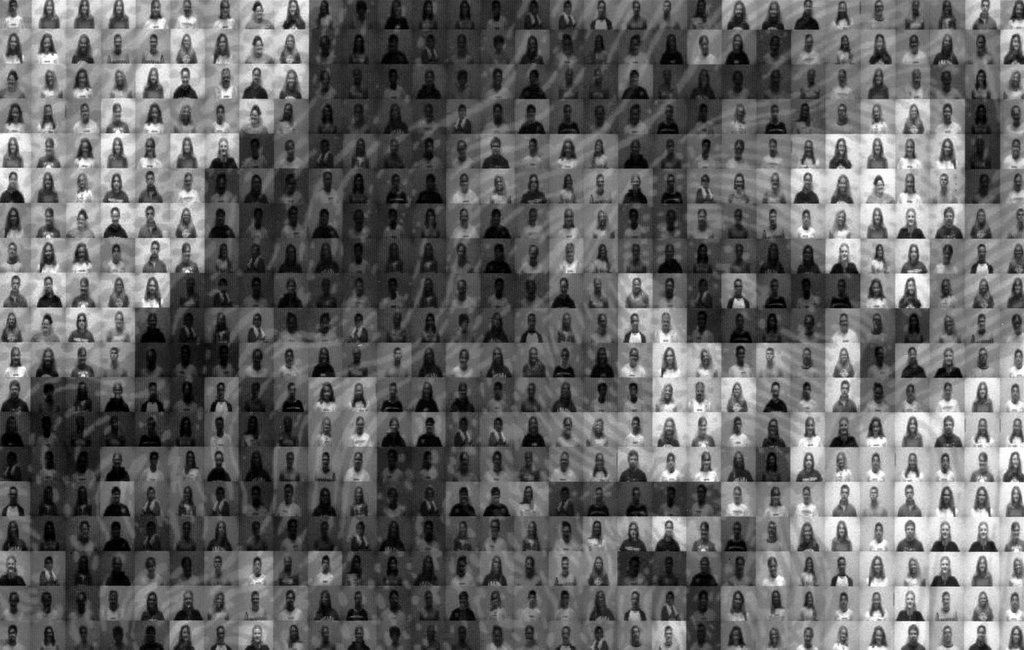
Why am I a Christian?

James has been pressing me on why I am a Christian as opposed to any other sort of religious person. These are some more-or-less connected thoughts.

1. I said to my sponsoring bishop that if I had been brought up in another culture, I’d still be the equivalent of a priest in the terms of that culture. If it was prehistoric I’d be a shaman, if in a Buddhist country I’d be a monk and so on. In other words I suspect there to be a large genetic component in my vocation, which would have found an appropriate outlet whatever the culture (and note, I don’t think there are any cultures without such an outlet, which is significant).

2. Following on from that, I think a large part of the answer as to why I am a Christian as opposed to following an alternative faith is exactly the same reason why I speak English rather than French or Mandarin: this is the culture that I have grown up in. Despite the atheist onslaught of the last two hundred years or so, the roots of our culture remain Christian. As soon as I started to explore the religious dimensions of life in any depth I was led to explore Christianity.

3. Obviously my religious experience has some relevance for this, but only in that the experience was mediated/understood using the Christian categories which I had absorbed from the culture and education, or which were presupposed by them.

4. It’s possible that the different faiths are paths up the same mountain, with the same destination. It’s also possible that they are paths up the same mountain, but some paths reach to the summit whilst some do not. I am open to the idea that to reach the summit “Christianity” would need to be left behind. I understand that, as a Christian, by distinguishing between Jesus and the religion formed in his name. In other words, I would still hold Jesus to be the summit of the mountain.

5. I consider it to be a snare and a delusion to engage very much time in ‘which is the best path’? The essential thing is to start climbing the mountain, to grow in understanding and holiness. Trying to work out which is the ‘best’ is a displacement activity. You can’t work out which is ‘best’ except from the top of the mountain.

6. We are formed by the presuppositions of our culture in profound ways, not least through our language. Running with the grain of the culture (ie in the West, pursuing Christianity) makes for an easier beginning in the path of faith.

That’ll do for now.

Lego God

A comment I’ve left over on Stephen Law’s site, which may be worth sharing here.

My kids like to play with lego (so do I). Imagine they are making an item – eg a spaceship – and there is a piece missing, and the ship doesn’t function properly without it.

The ‘god of the gaps’ argument says that God is the missing piece. Which leads to all sorts of problems for theology when the missing piece is discovered down the back of the sofa.

I would argue that God is Lego as such. That is, all the pieces are part of God. God is not so much a missing piece so much as the precondition for being able to build things at all.

In other words, the individual lego pieces are different aspects of life that are meaningful.

God is not a pixel

An old post which I’m bringing up front in response to the request from James, and NMMNG’s comment about cheap shots. Consider this a more expensive shot! Originally posted 22nd December 2005.

Some thoughts about intelligent design and evolution

Intelligent design has been in the news again – a sensible judge has ruled that it is not a scientific theory, and therefore it would be unconstitutional for it to be taught in public schools in the US. So far, so straightforward. What I am going to argue here is that ID is actually a mistake on theological grounds, and rests upon both a mistaken understanding of the worth of science, and, indeed, a mistaken understanding of the nature of God.

The argument between ID advocates and the establishment evolutionary theorists seems frequently to centre on ‘what cannot be explained’. For example Michael Behe argues that some systems are ‘irreducibly complex’ – in other words, they depend upon the prior existence of other complex elements before they become evolutionarily useful. In order to have element A which is a benefit, you also need elements B and C – but you can’t have B without A and C, and you can’t have C without A and B. Behe uses the example of a mousetrap – you need five parts to the mousetrap (base, spring, etc) for it to be a mousetrap at all. If any of the elements are missing, then there is no mousetrap, there is no evolutionary advantage – therefore there must be some conscious design which brings the different elements together.

Now Behe’s specific criticisms seem fairly weak (although the conceptual point is interesting) but his is just one example of various criticisms that can be made of established evolutionary theory. I have much sympathy with the general point that there are big holes in it – that, in the words of one review I read, ‘the big scientific story of the 21st century will be the overthrow of Darwinian evolution’ – and the grounds for that are, in essence, that the neo-Darwinian synthesis is built on Newtonian physics, and just as Newtonian physics has been put in its place, so too will the neo-Darwinian synthesis – but this overthrow will be accomplished by a genius biologist, working within established scientific arenas, not by a theologian. (Might be a MoQ inspired scientist though…)

For the issue of explanatory gaps and problems within evolutionary theory is a question of science – as the good judge has determined. It has absolutely nothing to say of theological interest. Worse, those who try to use these (wholly to be expected and normal) ‘gaps’ in the theory are actually engaged in very bad Christian thinking. For what we have is a form of ‘God of the gaps’ argument. Hey! Here is something that science can’t explain! Well THAT must be where God is! Phew! Thought we’d lost Him just then…

The ID advocates have already conceded far too much to science. They are arguing that because there are specific details which science cannot account for (eg evolution of the eye – tho’ they should read Dawkins on that one) therefore ‘God’ must be the explanation, and therefore this is a good argument for the existence of God. But the God that they are arguing for is a scientific artefact – an object – an idol. In the terms of the debate they have implicitly accepted that scientific standards of evaluation and judgement are the appropriate standards by which to judge the question of God’s existence – and this is idolatry. Those who argue that Intelligent Design is Christian do not know what they are talking about. Intelligent Design is a heresy, a blasphemy, a denial of the living God.

The issue at stake between the Christian and the atheist forms of evolutionary theory (eg Dawkins – not all those who work in the field of evolutionary theory are atheist) does not rest upon one particular instance or other. God cannot be ‘proven’ by the presence of a problem which science cannot give a full account of. On the contrary, the issue is one of how to interpret the whole. God is either fully present as Creator throughout all of the creation; or there is no God. To say that at the point where the scientific explanation comes up short – there is God – this is an abandonment of the faith, this is the Vichy regime of theologies.

The Christian insistence upon a creator is not the assertion of a scientifically established ‘fact’ – it is the assertion of the correct way to interpret all facts. It is about an attitude and orientation towards life – to receive all of life as a gift, and therefore to live in thanksgiving (eucharist) for that gift – and is therefore primarily about asserting that this world is a meaningful world. It is not the assertion of a fact ‘within the world’ – it is an assertion about the world as a whole.

So let me finish with an analogy, which may make my point clear. Consider a television screen (or a computer monitor). Go right up close, and all you can see are individual dots, picture elements, what we now call pixels. They are of myriad different colours; they change periodically. Science is about establishing the nature of the pixels – is this pixel green? Is this pixel blue? Intelligent Design is saying ‘No, this pixel isn’t blue, this pixel is God!’

God is not a pixel.

We step back from the screen – we put scientific endeavour into its proper context – and we see that there is the image of a man on the screen. It is an interpretation of the whole, it is not a question of detail.

Someone profoundly trained in science may still not be able to see the image. It is a Rorschach test, and this is the fundamental divide – is this pattern of dots meaningful or not? If it is – there is God. This is not a scientific question. This is not a question of intelligent design. This is a question of the language you use to describe the presence of meaning in the world.

‘I should like to say that … the words you utter or what you think as you utter them are not what matters, so much as the difference they make at various points in your life. How do I know that two people mean the same when each says he believes in God? And just the same goes for belief in the Trinity. A theology which insists on the use of certain particular words and phrases, and outlaws others, does not make anything clearer… It gesticulates with words, as one might say, because it wants to say something and does not know how to say it. practice gives the words their sense’. (Wittgenstein)

And

“You speak of signs and wonders
But I need something other
I would believe if I was able
But I’m waiting on the crumbs from your table”

Meaning, Suffering and Integrity

Returning to the discussion about suffering. This is long (c 3700 words).


We had an interesting reading from Romans in our last Sunday service:

“…but we also rejoice in our sufferings, because we know that suffering produces perseverance; perseverance, character; and character, hope. And hope does not disappoint us, because God has poured out his love into our hearts by the Holy Spirit, whom he has given us.” (Rom 5.3-5, NIV)

~~~

What does it mean to believe in God? Specifically, what does it mean for a Christian to believe in God? As I understand it, the essential element is about meaning or purpose – to believe in God is to believe that life is meaningful, is purposeful, and this meaning is by definition independent of personal choice or preference, it is something that stands outside of our desires and it is something to which we need to conform in order to flourish. The Christian claim is that this meaning became manifest in human form in the person of Jesus of Nazareth who taught, was crucified and rose again on the third day two thousand years ago. This is what is meant in the prologue to John’s gospel: the Word became flesh. The logos (meaning, purpose) took human form, lived amongst us, full of grace and truth. Thus, there may be many ways of describing meaning in human life; the Christian claim is that this meaning is explicitly revealed in Jesus yet (if a Christian accepts that all things were made through Christ) we can expect to find meaning outside of the Christian tradition. No genuine human meaning is incompatible with Christianity.

~~~

Consider what happens at a church wedding, and specifically the contrast with a state service. At both of them legal vows will be exchanged, yet in the former the language and liturgy of God is foremost; in the latter all references to religion are forbidden. Specifically, in the vows spoken in a church service there is the phrase ‘in the presence of God I make this vow’.

What is being referred to with this language of God is precisely the larger purpose, the larger framework of meaning, within which the vows have their place. There is an acknowledgment of several things: that the desires of the couple are not sovereign; that they are dependent upon God’s grace for the health of their relationship; that the commitment is sacred involving the most profound elements of the personality; that the process is open-ended, may involve drastic change to one or both parties, but that the covenant being made in the sight of God is being set up above whatever individual choices and preferences the parties bring to the agreement.

In other words, a marriage is not just a contract. To say that the marriage is being made ‘in the presence of God’ is to place the relationship in that larger framework of meaning and purpose from which all other meanings and purposes (in a Christian culture) derive their sense. It is about rooting the relationship in a much longer and deeper pattern of life than personal choice and desire.

It is, of course, perfectly possible to have a non-Christian wedding service that partakes of this same character, eg Jewish, Hindu, Buddhist wedding services. What I do not perceive to be possible is to have an explicitly atheist wedding service which partakes of the same sharing in a wider purpose, independent of human choices. The difference I perceive between humourless and sophisticated atheism is that the former doesn’t recognise there to be any problem here; the latter does, and offers alternatives. It is not so much the word ‘God’ itself that matters, it is the acknowledgment of something higher.

~~~

How does human suffering fit in with this context of meaning? How does this understanding of the word ‘God’ fit in with “the problem of suffering”? There seem two ways to address this issue, one academic, one more personal.

The academic issue is to point out inconsistencies between supposed attributes of God and the presence of suffering, either as a logical problem (see here) or as an ‘evidentiary’ problem (see here). The greatest problem of these academic approaches is that they mistake the nature of (in particular) Christian faith in God. There are three inter-linked problems:

i) it is a central claim of the tradition that God is ultimately mysterious and not finally knowable. We cannot attain to a position of oversight with respect to God, we are always in an inferior position – that’s part of what the word ‘God’ means – something which is above and beyond our comprehension. Any analysis which seeks to render God’s attributes definable is not engaging with a Christian analysis;

ii) related to this is the axiom that I have mentioned several times before about idolatry. This can be defined in several ways, one of the simplest being ‘God is not a member of a set’ (including the set of things which are not members of a set!). This is a rule of thumb – a grammatical rule – determining how the word God can be used. What it means is that nothing definable in the human realm can be given an absolute meaning. All things are subject to change;

iii) a third implication is that it is blasphemous to try and justify God to humanity – what is technically called theodicy – because the attempt necessarily violates points i) and ii) above, and therefore runs counter to the meaning and purpose that the word God refers to. This doesn’t mean that the problem can’t be considered and clarified further through discussion – it does mean (and this is something that is slowly dawning on me personally) that the faithful not only cannot provide an intellectually satisfactory answer, but that they mustn’t. This is one of the points I take from the Hart article.

~~~

One of the problems that I have experienced in discussing this issue is that many theologians explicitly pursue theodicies. The implication of my argument above is that they are faithless. I do not believe it to be an accident that Modern Protestants are over-represented amongst such thinkers.

A Modern Protestant might agree that ‘There is an x such that x is God’. More traditional Christians cry out with Augustine ‘our hearts are restless until they find their rest in thee’.

~~~

You can add up the parts
but you won’t have the sum
You can strike up the march,
there is no drum
Every heart, every heart
to love will come
but like a refugee.

Ring the bells that still can ring
Forget your perfect offering
There is a crack, a crack in everything
That’s how the light gets in.

(Leonard Cohen, Anthem)

~~~

The more personal problem of suffering relates to what people actually do when they are faced with suffering. When a person’s world crumbles around them because of a particular turn of events is it still possible to claim that life is still meaningful? Does the language about the world having meaning and purpose, apart from our own choices, still make any sort of sense when confronted with life-shattering circumstances? The question could be: when we are in the pit of despair, is there a ladder that can be used to climb up out?

There are at least three options:

i) a nihilist answer: there is no ladder. Life is bleak and meaningless. There is no higher purpose. Get used to it! Stop indulging in lily-livered sentimentalism and self-deceit. The trouble I see with this sort of answer is that it destroys everything that makes humanity distinctively human – there is no longer any human Quality available. There is nothing to build a life around.

ii) an enlightened existentialist answer: make the ladder yourself, out of your own resources. Where I think this line of thought breaks down in this context (it breaks down elsewhere too) is that it is appealing to resources of character and moral strength that may be precisely what have been exhausted by the suffering.

iii) a Christian (or other religious response) which, ultimately, ends up talking about mystery. That which was thought to be God – a stable source of meaning and value – turns out now to be no such thing. Either there is no God (options i) and ii) open up) or else God is not what God was thought to be. In other words the context of suffering is one where we are brought closer to reality and closer to God. For they are the same thing in the end. Option iii) is essentially a declaration of faith.

~~~

This was a sermon I gave at the funeral of a teenage girl who had taken her own life:

We have come and gathered in this church today to mourn the death of _____; to lament for a life lost all too soon; to seek some measure of understanding of what has been, and perhaps, some hope for what will be.

In all of the tragedies offered up in our human life, very few are as severe or as painful as the loss sustained by ________’s family. It is a loss which shatters all the foundations on which a family is built up – the bonds of love and trust which hold a family together. As the reading from the book of Lamentations puts it – “In all the world has there been such sorrow?” And this shock and grief is not confined to ________’s own family, for it is something which affects the entire community, all of us gathered here today. For we do share life with each other. We are not separate from each other. We are our brother’s keeper, and our sister’s keeper. And so this wound, which is so overwhelming for _______’s family, is also a wound in our community, our fellowship of neighbours and friends. Where do we go from here?

When someone takes their own life, we who are left behind are confronted with questions. The pain inside demands an answer, and so the mind tortures itself with doubt and worries. Was there something that I could have said differently that might have prevented this? Was there something I could have done that would have eased the pain in _______’s heart? If only I hadn’t done this or said that. This is our natural reaction, it is a reaction of care and concern which demonstrates the love we had for _______. But ultimately, there can be no final answers; there certainly cannot be any final blame. We are confronted, in _______’s taking of her own life, with a deep and a very painful mystery. And all we can ask is ‘why?’ Perhaps most of all, we ask, ‘Why God? Where were you in all this?’ For it seems to me that when we are faced with pain that we do not understand, when we come close to being overwhelmed by it, what is most painful is the meaning of what has happened. We ask the question why. Why God? Why?

In our gospel reading we heard the story of the death of Lazarus, which also gathered a community together in grief. When Jesus comes to Mary and Martha he is too late to prevent Lazarus’ death – Lazarus, whom he loved and befriended. And it wasn’t that Jesus couldn’t get there in time – he chose to delay for a few days. And both Mary and Martha ask him why, saying “Lord, if you had been here, Lazarus wouldn’t have died.” We don’t know why Jesus didn’t come immediately. Just as we don’t know why nothing prevented _______’s death. We do know that Jesus was terribly upset by the death, and by the grief of the community. And in consequence, Jesus acts to raise Lazarus from death, to unbind him from his shroud and release him from his tomb. Lazarus is set free from death – a promise of resurrection that is extended to all who trust in Jesus.

But why couldn’t Jesus just have prevented the death in the first place? Why couldn’t God make a world which doesn’t have suffering in it? Why can’t he tell us how and why it all makes sense – why is it that this world is the sort of place that _______ couldn’t cope with, when she had so much to live for, and there was so much love available for her? I have no easy answer for that question. We live within the world that He has created, where we must wrestle and struggle with this mystery of human pain and suffering. But in the face of that suffering, I do believe that there is the possibility of hope; and that hope is the only answer we can find, which might heal our wounds.

For Christians follow an innocent man who was hung to death on a cross; and a representation of that event hangs above me now. And his cry from the cross was “My God, my God, why have you forsaken me?” For Jesus also felt abandoned by God, even he couldn’t understand what it was that was happening. And yet on the morning of the third day, he was raised to life again, which is why we still talk about him over 2000 years later. This might seem just to replace one mystery with another, but what has changed is that we can hope. For when we are confronted with pain that we don’t understand, when we feel cheated by life, we still have a choice. We can say that life is meaningless, that it doesn’t make sense, and reject everything that God has given to us. But if we do that, we never move away from the cross. We remain rooted in our pain and we never get to Easter morning. For the alternative is to say, although I don’t, although I can’t understand how this tragedy can make sense, I trust… I trust that God is in charge, that He loves us, and that no one who is truly loved is ever lost. For love is eternal, it is what the world is made of, and it is what the maker of this world is made of.

In the face of the pain of this tragic event, if we can trust in God, if we can hold on to hope, we can trust that one day we will share in that resurrection when, finally, we will understand how and why it all makes sense. On that day we shall be reunited with those we love, and then there will be no more pain, there will be no more grief and sorrow, and God will gently wipe away every tear from our eyes.

~~~

I see the personal problem as much the most important and significant question to address. That is why I want to know what (humourless) atheists would say to people in concrete situations. Do they choose option i) or ii) or do they choose different ones? It’s not a trivial request and the discussion will forever share a certain abstract and unreal quality until answers are provided.

“Life can educate one to a belief in God. And experiences too are what bring this about; but I don’t mean visions and other forms of sense experience which show us the ‘existence of this being’, but, eg, sufferings of various sorts. They neither show us God in the way a sense impression shows us an object, nor do they give rise to conjectures about him. Experiences, thoughts, – life can force this concept on us.” (Wittgenstein, 1950)

Why is it that it was the highly educated in Paris who were so shocked by the Lisbon earthquake, whereas those who had experienced the suffering carried on with their prayers? Could it be that for all their intellectual refinement they were not as in touch with reality as the poor Portuguese? It is, after all, part of the logic of belief in God that non-belief is evidence of delusion, of a failure to properly grasp the nature of reality.

~~~

Can the ladder be climbed up? Or is it simply delusional to think that life is meaningful?

One of the things that I feel is often missed in discussion with atheists is the necessary connection between ‘God’ and ‘meaning/purpose’. From my perspective you cannot have one without the other – which means that if meaning and purpose are accepted as part and parcel of human life then that necessarily implies a belief in God.

Of course, the word ‘God’ is not the crucial thing here. The attainment of union with that meaning and purpose could be called Nirvana and still be referring to the same thing. The language that has been developed in our culture happens to be drawn from the Jewish and Christian scriptures. The way in which we talk about things that are worthwhile, indeed, what sort of things we count as being worthwhile, are inherited from this Christian context.

What is important is not the words or rituals that are used but the life that is lived. And where the life is lived with hope, integrity and purpose – there is God.

“What can we bring to the Lord?
What kind of offerings should we give him?
Should we bow before God
with offerings of yearling calves?
Should we offer him thousands of rams
and ten thousand rivers of olive oil?
Should we sacrifice our firstborn children
to pay for our sins?

No, O people, the Lord has told you what is good,
and this is what he requires of you:
to do what is right, to love mercy,
and to walk humbly with your God.” (Micah 6.6-8 NLT)

~~~

I was profoundly struck by Scott g’s comment (here)”pirsig painted constant attempts to have us resonate with a model of ‘quality,’ both by what it is and what it isn’t, and i would expect you to constantly attempt to paint whatever you need to to have us resonate with ‘god.’ this is the difference between what you do, and what pirsig does. what pirsig does is enlightening, and what you do is frustrating. pirsig wants us to get it. you seem to not want us to get it.”

I think I have been at fault in these discussions. The first fault is one which the interlocutors at Stephen’s site have picked up on, describing me as having a strategy “of obfuscation and smokescreen delivered with an air of intellectual and spiritual superiority.” I am culpable of intellectual arrogance. Specifically: I do believe that no open-minded person with a genuine curiosity about the issues could remain a humourless atheist; I do see it as an intellectual backwater driven more by a polemical agenda than a heartfelt pursuit of truth. Which is why I enjoy engaging with sophisticated atheists so much – they recognise, inter alia, that a) there is more to Christianity than Modern Protestantism; b) that the rhetoric of science doesn’t match up with the reality; c) that the heritage of Christianity is still dominant in Western societies; d) that Christianity and other religions engage in certain humanly essential pursuits which need to be addressed by anything purporting to replace it.

I think I need to repent of some intellectual arrogance, and that repentance needs principally to take the form of listening more attentively to interlocutors. What went wrong with the recent conversation at Stephen Law’s site would seem to be that I lost track of what was actually being asked.

There is a second fault flowing from this, and from the above. I have been engaging in the argument on secular terms and it is becoming more and more clear to me that the framework of the debate is inherently atheistic. That is, it is impossible to explain the word ‘God’ and all that it means whilst accepting a secular frame of reference (and by secular I mean the late Modern Protestant framework that most Philosophy of Religion is pursued within).

Scott correctly identifies the solution: ‘pirsig painted constant attempts to have us resonate with a model of ‘quality,’ both by what it is and what it isn’t, and i would expect you to constantly attempt to paint whatever you need to to have us resonate with ‘god.’

I think this is exactly right. I need to talk positively about what God means – God as understood and explored within the mainstream Christian tradition. God is not a concept to be defined but a reality to be explored. And I have no desire to hide that in a smokescreen.

~~~

What I am really thinking about is a discussion of ‘the way’. Protestant cultures have a high reverence for words – it is a legacy of the technological revolution which put the Bible into every household, as the immediate source of authority. Yet words are ultimately useless. Another Wittgenstein reference: ‘it has been impossible for me to say one word in my writings about all that music has meant to me in my life. How then can I hope to be understood?’

I do need to talk about the way – about how meaning and purpose are integrated into a life – about how the presence of suffering not only doesn’t destroy that meaning but is tied up with it, in that the most profound understandings of meaning and purpose come on the far side of the suffering, not before.

And the way is not something reducible to words. It has to be shown in order to make any sense. Which brings us back to where I began – with Jesus. Christianity makes no sense without him, without what he taught, how he lived, how he died and rose again. The way I would want to describe is the way that he walked. It is not a matter of words but of the Word – the logos. The logic which animates Christian life, and which can’t ultimately be wrapped up in neat and tidy definitions. It can only be shown with a life.

~~~

An honest religious thinker is like a tightrope walker. He almost looks as though he were walking on nothing but air. His support is the slenderest imaginable. And yet it really is possible to walk on it.

Wittgenstein, 1948

Reasonable Atheism (22): The problem of definitions

In the debate going on at Stephen Law’s place (here) The Celtic Chimp made this comment:

“I eventually had to give up arguing with Sam. His beliefs are so vague and insubstantial that I have come to doubt that Sam himself knows what he believes. I think ‘God cannot be the member of any set’ was the straw that broke the camels back.
I offer fair and honest warning to anyone with a healthy respect for actually taking a definable position. Debating with Sam is like going to the movies to see a film. There are tons of adverts for forthcoming movies and then the credits roll.”

I thought this was quite an amusing image, but it needs a decent response – click ‘full post’ for text.

In a debate where one person refuses to give a concrete definition of their terms, it is understandable that the other parties become frustrated because this seems to go against all the norms of proper philosophical debate. However, what this reveals is the desire for ‘definitions’ – and this desire is one of the main targets of Wittgenstein’s philosophical therapy.

Some paragraphs edited from this essay.

For Wittgenstein the source of the traditional approach to philosophy was Socrates (he sometimes called the source of confusion ‘Plato’s method’).. He once said to his friend Drury [Quoted in The Danger of Words, M O’C Drury, Thoemmes Press, 1996, p115.], ‘It has puzzled me why Socrates is regarded as a great philosopher. Because when Socrates asks for the meaning of a word and people give him examples of how that word is used, he isn’t satisfied but wants a unique definition. Now if someone shows me how a word is used and its different meanings, that is just the sort of answer I want.’ Or consider these remarks, the first made in 1931, the second in 1945: ‘Reading the Socratic dialogues one has the feeling: what a frightful waste of time! What’s the point of these arguments that prove nothing and clarify nothing?’; ‘Socrates keeps reducing the Sophist to silence, – but does he have right on his side when he does this? Well it is true that the Sophist does not know what he thinks he knows; but that is no triumph for Socrates. It can’t be a case of “You see! you don’t know it!” – nor yet, triumphantly, of “So none of us knows anything”.’

I expect that Wittgenstein had in mind a passage such as this one, from Socrates’ first speech in the Phaedrus: ‘in every discussion there is only one way of beginning if one is to come to a sound conclusion, and that is to know what one is discussing… Let us then begin by agreeing upon a definition’. In the conclusion of the Phaedrus Socrates restates this: ‘a man must know the truth about any subject that he deals with; he must be able to define it.’

For Wittgenstein it is this emphasis upon definability in words which is the source of all our metaphysical illusions. For Wittgenstein Socrates was the source of all our metaphysical troubles, and the source of (for example) Descartes’ ‘clear and distinct ideas’ lies ‘…as deep in us as the forms of our language’. It seems clear that, as Baker and Hacker put it in their commentary on the Investigations [GP Baker and PMS Hacker, Wittgenstein: Meaning and Understanding, Blackwell, 1997, p350], ‘Wittgenstein noted that some of the deep distortions of meaning, explanation and understanding originate with Plato’.

Consider this remark of Wittgenstein’s from 1931: ‘People say again and again that philosophy doesn’t really progress, that we are still occupied with the same philosophical problems as were the Greeks. But the people who say that don’t understand why it has to be so. It is because our language has remained the same and keeps seducing us into asking the same questions. As long as there continues to be a verb ‘to be’ that looks as if it functions in the same way as ‘to eat’ and ‘to drink’, as long as we still have the adjectives ‘identical’ ‘true’ ‘false’ ‘possible’, as long as we continue to talk of a river of time, of an expanse of space etc etc, people will keep stumbling over the same puzzling difficulties and find themselves staring at something which no explanation seems capable of clearing up. And what’s more, this satisfies a longing for the transcendent, because in so far as people think they can see the “limits of human understanding’ they believe of course that they can see beyond these’.

Fergus Kerr has written that ‘The history of theology might even be written in terms of periodic struggles with the metaphysical inheritance’ [Fergus Kerr, Theology After Wittgenstein, Blackwell, 1986, p187.] and it does seem as if there is something intrinsic to metaphysical endeavour which is inimical to the practice of theology, certainly on a post-Wittgensteinian account of metaphysics. The argument ultimately concerns the nature of language and how far it can express religious truth. For Wittgenstein ‘the words you utter or what you think as you utter them are not what matters, so much as the difference they make at various points in your life’ [Culture and Value, p85] and I think that this is wholly in tune with Wittgenstein’s comment that he would by no means prefer a continuation of his work to a change in the way people live which would make all these questions superfluous.’

For Wittgenstein it is always action which is primary – ‘In the beginning was the deed’ – and our language gains its sense from being embodied in certain practices. Consider the following passage (written in 1937): ‘Christianity is not a doctrine, not, I mean, a theory about what has happened and will happen to the human soul, but a description of something that actually takes place in human life. For ‘consciousness of sin’ is a real event and so are despair and salvation through faith. Those who speak of such things (Bunyan for instance) are simply describing what has happened to them, whatever gloss anyone may want to put on it.’

~~~

The reason why the Chimp finds me evasive, and others call me ‘more slippery than soap’ is because a) I don’t believe we can define God, b) I don’t think definitions are the be-all and end-all of fruitful discussion, but most of all c) because I accept that ‘practice gives the words their sense’ – and it is only by attending to the practice of Christian life, most of all in the Eucharist, that Christian understandings of God can be found.

Theodicy meme

To my great pleasure and interest, people are running with the theodicy meme.

These are the answers I’ve found so far:
Peter
John
Doug
Iyov
Velveteen Rabbi (lovely title for a blog)
Lingamish
Jim West
James McGrath (and I should say that clicking through to his site made me see a tremendously significant SPOILER for the next episode of Lost which has made me a trifle upset; I normally postpone reading James until after I’ve seen the relevant episodes!)
Eddie Arthur
Journeyman
Tom
Chuck Grantham
Tzvee Zahavy
Duane Smith
Alto Artist
Amber Temple
Mark Woo
Several responses at Sarx

I’ll try and keep tabs on them all and put the links up here.

For my earlier post on the problem of suffering go here.

The meme is being spread around the community of believers (from which I gain reassurance that my perspective is not at all unusual) but criticisms from an atheist angle can be found at Stephen Law’s place. He’s written quite a lot about it (see here).

Reasonable Atheism (19): Four questions on theodicy

In a comment, scott (gray) asked these four questions, which I think could work as a meme…

1. if the nature of god is omnipotent, benevolent, and anthropomorphic (that god is a person, who sees suffering as wrong, and can change all of it), why does god not act to relieve all suffering, or at least the greatest amount of suffering for the greatest amount of people the greatest amount of time?
2. if you were god, and you were omnipotent and benevolent, how would you respond to suffering?
3. if this is not the nature of god, what is the nature of god, that allows suffering in the world?
4. if these are the wrong questions to ask, what are the right ones?

My answers:
1. Put briefly I don’t think that these philosophical categories map naturally onto the Christian God (they are Greek rather than Hebrew?). In particular God does not act arbitrarily (that is, he is consistent) and therefore once he is in the relationship of creator to creation, which allows freedom, he doesn’t overpower that freedom of creation. Hence we have sin which causes suffering (which is a way of saying: Christians interpret suffering as estrangement from God. I think there is a deeply embedded overlap here between the orthodox Christian view and the Buddhist idea that suffering is illusion, but I would want to ponder that more).
2. Well, I’m not God and part of the problem is that God’s will is by definition unfathomable. I’m not sure that a God who was fully explicable in human terms would be worth worshipping. I think this is one of the most crucial areas that lead to incomprehension on the part of atheists, because belief in God requires a certain degree of surrendering judgement and that is so profoundly taboo in Modern understandings that it is barely even mentionable.
3. The nature of God is resurrection after crucifixion. Suffering is overcome and redeemed, not blotted out.
4. I think the question I would want to pursue in the context of a conversation about suffering is: what makes life meaningful in the face of death? Does anything matter? How do we order our lives in such a way that they gain integrity and depth and meaning in the face of what can appear a totally capricious fate? (Nussbaum is really good on outlining the Ancient Greek interpretations of this in The Fragility of Goodness) It seems to me that as soon as a positive answer to these questions is explored either all meaning is self-generated and chosen (which is the specifically Modern conceit) or else we begin to talk about meaning being derived from something apart from our choices. At that point we have entered the realm of religious language and theology.

To turn it into a meme, I tag John, Peter, Paul, Joe and Tom.

Reasonable Atheism (18): Hart, Law and the problem of suffering

I sent a link to David Bentley Hart’s article on the problem of suffering to Stephen Law, which has occasioned some discussion, much of which seems to be incomprehension. I think this is a good example of where there is some talking past each other going on (partly because Hart’s argument is addressed to a Christian audience) so I thought I’d try and summarise what Hart’s argument is. Click ‘full post’ for text.

As I read it, Hart is arguing for the following four points (my emphases in bold):
1. The problems thrown up by these catastrophes are not new problems

“…nothing that occurred that day or in the days that followed told us anything about the nature of finite existence of which we were not already entirely aware.”

2. Atheists don’t understand Christian perspective

“…it is difficult not to be annoyed when a zealous skeptic, eager to be the first to deliver God His long overdue coup de grâce, begins confidently to speak as if believers have never until this moment considered the problem of evil or confronted despair or suffering or death.”
“It would have at least been courteous, one would think, if he had made more than a perfunctory effort to ascertain what religious persons actually do believe before presuming to instruct them on what they cannot believe.”
(On Voltaire’s response to the Lisbon earthquake): “Voltaire’s poem is not a challenge to Christian faith; it inveighs against a variant of the “deist” God, one who has simply ordered the world exactly as it now is, and who balances out all its eventualities in a precise equilibrium between felicity and morality.”

3. It is the fault of Christians themselves that they’re not understood – lots of bad theology

“In truth, though, confronted by such enormous suffering, Christians have less to fear from the piercing dialectic of the village atheist than they do from the earnestness of certain believers … more troubling are the attempts of some Christians to rationalize this catastrophe in ways that, however inadvertently, make that argument all at once seem profound.”
“All three wished to justify the ways of God to man, to affirm God’s benevolence, to see meaning in the seemingly monstrous randomness of nature’s violence, and to find solace in God’s guiding hand. None seemed to worry that others might think him to be making a fine case for a rejection of God, or of faith in divine goodness. Simply said, there is no more liberating knowledge given us by the gospel — and none in which we should find more comfort — than the knowledge that suffering and death, considered in themselves, have no ultimate meaning at all.”
Dostoevsky: “Ivan asks, if you could bring about a universal and final beatitude for all beings by torturing one small child to death, would you think the price acceptable?”
“Voltaire sees only the terrible truth that the actual history of suffering and death is not morally intelligible. Dostoevsky sees — and this bespeaks both his moral genius and his Christian view of reality — that it would be far more terrible if it were.”
“No less metaphysically incoherent — though immeasurably more vile — is the suggestion that God requires suffering and death to reveal certain of his attributes (capricious cruelty, perhaps? morbid indifference? a twisted sense of humor?). It is precisely sin, suffering, and death that blind us to God’s true nature.”
“…consider the price at which that comfort is purchased: it requires us to believe in and love a God whose good ends will be realized not only in spite of — but entirely by way of — every cruelty, every fortuitous misery, every catastrophe, every betrayal, every sin the world has ever known; it requires us to believe in the eternal spiritual necessity of a child dying an agonizing death from diphtheria, of a young mother ravaged by cancer, of tens of thousands of Asians swallowed in an instant by the sea, of millions murdered in death camps and gulags and forced famines. It seems a strange thing to find peace in a universe rendered morally intelligible at the cost of a God rendered morally loathsome.

4. Suffering is evil, a cosmic disorder, which will be put right (ie mended)

“Ours is, after all, a religion of salvation; our faith is in a God who has come to rescue His creation from the absurdity of sin and the emptiness of death, and so we are permitted to hate these things with a perfect hatred. [SN: ie not try to justify them] For while Christ takes the suffering of his creatures up into his own, it is not because he or they had need of suffering, but because he would not abandon his creatures to the grave.”
“As for comfort, when we seek it, I can imagine none greater than the happy knowledge that when I see the death of a child I do not see the face of God, but the face of His enemy. It is not a faith that would necessarily satisfy Ivan Karamazov, but neither is it one that his arguments can defeat: for it has set us free from optimism, and taught us hope instead.”
“We can rejoice that we are saved not through the immanent mechanisms of history and nature, but by grace; that God will not unite all of history’s many strands in one great synthesis, but will judge much of history false and damnable; that He will not simply reveal the sublime logic of fallen nature, but will strike off the fetters in which creation languishes; and that, rather than showing us how the tears of a small girl suffering in the dark were necessary for the building of the Kingdom, He will instead raise her up and wipe away all tears from her eyes — and there shall be no more death, nor sorrow, nor crying, nor any more pain, for the former things will have passed away, and He that sits upon the throne will say, “Behold, I make all things new.”

~~~~~~~~~~~~

In sum, Hart is arguing that Christian theology does not seek to explain or justify the existence of suffering in the world in terms of God’s ultimate purpose. Suffering is understood as a disorder, a privation of the good, something which is opposed to God and which can therefore be ‘hated with a perfect hatred’.

Lying behind this article is another perspective that needs to be taken account of in order to understand his argument, about what it means to call God ‘good’. Orthodox Christianity is very careful about what it means to call God ‘good’ because of the ever-present danger of tacitly assuming a place from which to judge God as either good or evil. So when a Christian believer calls God ‘good’ the language does not function in the same way as it would when such a Christian describes another person as good (or evil), and, further, it becomes just as meaningful to describe God as the source of suffering (of ‘weal and woe’ as Isaiah puts it) as it would be to describe God as source of good things when those good things are judged as such in human terms.

This is why possibly the most important sentence in Hart’s article is this comparatively early one: “Simply said, there is no more liberating knowledge given us by the gospel — and none in which we should find more comfort — than the knowledge that suffering and death, considered in themselves, have no ultimate meaning at all.” In other words, the problem of suffering is not as important as we might think it to be, and when Christian theologians treat this problem as something that calls into question the existence of God, they are giving it more importance than it deserves (as a theological question). If this world is all that there is, then the problem of suffering is enhanced – for in the face of suffering and death, how can meaning be established? Yet if – as Christian theology insists – there is more to life than what we can perceive with our immediate material senses, then it is possible to assert that meaning (and therefore the language of faith – Godtalk – theology) persists in the face of suffering.

One way of bringing this out is to return to the question of Voltaire and the response to the earthquake in Lisbon. There was no immediate cessation of belief in God on the part of the residents of Lisbon, rather the opposite. It was only on the cultured sensibilities of Voltaire and his ilk that this event had such an impact; as Hart implies, it was only to theodicy – which, as a form of justifying God to humanity, cannot be orthodox Christianity – that such events were a shock. I do not believe it to be accidental that it is to the increasingly affluent and cultured despisers of faith that such traumas are experienced as shocking. Those who spend their lives more closely engaged with the daily reality and struggle for existence, who are much more acquainted with suffering on a daily basis, are also the ones in whom religious faith is most deeply rooted. (But then, they tend not to be educated in the Western sense, so their views don’t count…)