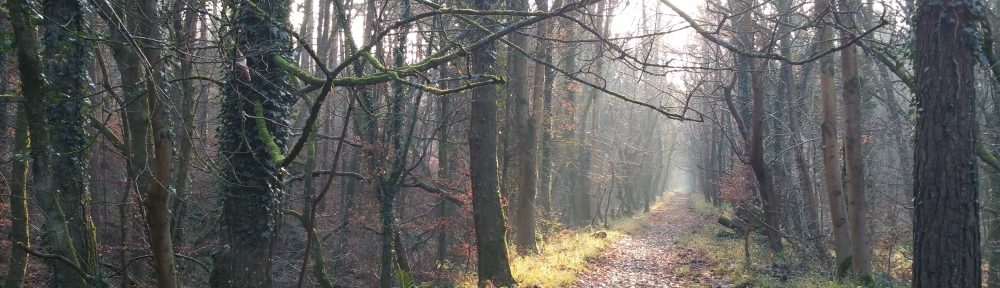

I thought it was the one on the left.
(Let the reader understand 😉
Author Archives: Elizaphanian

TBTM20090306

What if all the alternatives fail?
First a good video which I originally watched at Justin’s place, tho’ it has done the rounds since then.
The Crisis of Credit Visualized from Jonathan Jarvis on Vimeo.
This post is really for Alex so that he can parade the size of his economic little finger (grin).
Some propositions for discussion:
a) the great majority of banks are radically insolvent;
b) the extent of the insolvency dwarfs the assets of the governing class (including nations);
c) all attempts to keep insolvent banks afloat will fail – the only question is about how much of our money is destroyed trying to keep them afloat;
d) the way things are going, the authorities will _probably_ end up inflating their way out of the crisis (‘quantitative easing’) – we’ll have a deflationary moment and then a sustained period of inflation, which will lead to the middle classes being wiped out; those that survive will be those that have access to either land (including being mortgage-free) or tradable skills (and most white-collar skills are not tradable);
e) the attempt to keep things going is immoral as it punishes the virtuous and rewards the vicious;
f) the status quo ante is gone, vanished, kaput. It is Obama’s failure to grapple with this – symbolised by his appointment of various corrupt and shady establishment figures – that is the most ominous thing in the world scene at the moment.
(Actually, that last is hyperbole. The implosion of Pakistan and the forthcoming implosion of Mexico are much more serious. I still think that the financial crisis is overemphasised!)
TPT20090305 (Sad dog)

Shot from inside James’n’Maggie’s place.
From a Labour MP
Teenage girls shouldn’t be having underage sex. Why? Because it’s wrong.
Teenage girls shouldn’t choose to have babies as an alternative to getting an education and a career. Why? Because it’s wrong.
Parents shouldn’t teach their children that a lifetime on benefits is attractive or even acceptable. Why? Because it’s wrong.
(H/T Iain Dale)
40FP(6): Hosea 4.1-6
This needs to be from the RSV translation:
1 Hear the word of the Lord, O people of Israel; for the Lord has an indictment against the inhabitants of the land. There is no faithfulness or loyalty, and no knowledge of God in the land.
2 Swearing, lying, and murder, and stealing and adultery break out; bloodshed follows bloodshed.
3 Therefore the land mourns, and all who live in it languish; together with the wild animals and the birds of the air, even the fish of the sea are perishing.
4 Yet let no one contend, and let none accuse, for with you is my contention, O priest.
5 You shall stumble by day; the prophet also shall stumble with you by night, and I will destroy your mother.
6 My people are destroyed for lack of knowledge; because you have rejected knowledge, I reject you from being a priest to me. And since you have forgotten the law of your God, I also will forget your children.
Why is this a favourite passage?
I first discovered this text when I was an undergraduate, attending a lecture on Hosea, and I still use the Bible that I had that day where I marked the page ‘eco’! It has become a text laden with personal meaning for me, which sums up my vocation, in so far as I can perceive it accurately.
Verses 1&2: in Scripture, so far as I can tell, there is a direct link between believing in God and behaving well – the two are different descriptions of the same thing, the life of righteousness. This is the context for the Psalmist saying ‘The fool says in his heart there is no God’ – he goes on to explain what is meant by this when he says that there is nobody who does good, no not one. To believe in God simply IS to be righteous; conversely where there is a lack of righteousness – swearing, lying, adultery etc – then the real knowledge of God is absent.
Verse 3: this failure of relationship, this breaking apart from God, manifests itself in global symptoms of disorder, especially ecological ones, building upon the human violence of the previous verse. This is how I see the ecological crisis we are living in (and where I have something in common with the more barking fundamentalist elements of pre-trib rapture in the US) in that I see the world as being in God’s hands and not in ours. We are not able to put everything right with the world – but if we turn back to God, then God will put it right (the symptoms will be relieved).
Verse 4: the root of the problem lies with the religious class; they have failed in their duty to share the living faith, and have become distracted with the perks of the job (spelled out later on in Hosea 4). “With you is my contention O priest” – a totally different translation to the NIV and one that captures this intent. What the ‘right’ translation is I shall leave to those better qualified; from my point of view, though, this was the text as I originally discovered it, and it is this translation which sunk its claws into me.
Verses 5&6: the priestly class will share in the bad consequences that follow from falling away from God and living unrighteously. In particular they will be rejected as priests – presumably by God, but also, as I read it, by the people themselves. The people will turn away from the worldly priesthood, and will seek the living God wherever they can find him. This is how I interpret the decline in church attendance; Western Christianity in general, the Church of England in particular, has lost its way, has forgotten what it is here for, has been suborned by the worldly state, domesticated and castrated, kept on as a cute housepet that’s useful for ornamental functions.
Woe to you O Christian!
Woe to you who seek the living God! – for you shall find Him!
TBTM20090305

Gran Torino

Magnificent. 5/5
(For a few more words on why, see +Alan, although I think he misreads the confession scene.)
40FP(5): John 5.39-40
This came up in Morning Prayer today.
“You diligently study the Scriptures because you think that by them you possess eternal life. These are the Scriptures that testify about me, yet you refuse to come to me to have life.”
Why is this a favourite passage?
This is Jesus in argument with the Pharisees and other religious authorities (the ‘Jews’ in John) and I love these verses because it is an explicit statement by Jesus of the purpose of Scripture – that they point to Jesus himself, and that Jesus himself, as the living Word, is the source of life. The Scriptures only give life in so far as they mediate Him. This was the burden of my last Learning Supper talk when I argued that through Scripture there is an ongoing evolution in how “the Word of God” was understood, moving through at least five stages: i) prophetic inspiration; ii) the Law; iii) Scripture; iv) the Gospel (kerygma) and ultimately v) Jesus himself. So long as we keep Jesus as the summit we can interpret the others aright. When we distort that hierarchy, eg through pushing iii) to the top of the tree, then we end up missing the point. That is what Jesus is criticising: mistaking the finger for the moon.
A relevant quote from John Stott that I love:
Interviewer – You didn’t mention the Bible, which would surprise some people.
John Stott – I did, actually, but you didn’t notice it. I said Christ and the biblical witness to Christ. But the really distinctive emphasis is on Christ. I want to shift conviction from a book, if you like, to a person. As Jesus himself said, the Scriptures bear witness to me. Their main function is to witness to Christ.
TBTM20090304

One of the reasons why I have become more sceptical about the ‘climate change consensus’ is that the IPCC overestimates the extent of fossil fuel reserves. This is another item confirming that the amount of coal available is less than previously assumed (95% less in this case!).