
I hate it here (updated)

Thought I’d revisit this post from December 2006 (which I was reminded of by a conversation with Byron)

I wanted to use a blog post to write down how I see things panning out. I’ll probably re-appraise this on a regular basis, to see how my expectations are matching up with reality. I am conscious of an element of wishful thinking in the analysis – the simple truth is that I hate the way that the world is presently arranged, and I long for it to end. Maranatha!
One background assumption – I believe that humankind will not change its behaviour until it has exhausted all the alternatives. So this is pessimistic.
Point 2: the impact of a decline will spark a number of positive feedback systems, exacerbating the crisis. The positive side is that there will be some warning of what is coming, for those who can read the signs of the times. However, people will still not believe the scale of what is coming until it is too late. There will be a severe shortage of fuel throughout the West. Governments will ration it; at the bottom of the rationing heap will be the private user. Given the scale of the problem private commuting based upon fossil-fuels will cease, never to return. (This is a good thing. Kill the car! Let us be human!)
Point 3: one key positive feedback system will involve wider armed conflict throughout the world, especially in the Middle East. The key question there is whether the outcome will be an expansionist Islamist caliphate or an eventually nuclear Islamic civil war. I believe that the US/UK leadership is now actively fostering the latter. More widely, the West will outcompete the 3rd World for scarce petroleum and this will provoke die-off, especially in Africa. There are likely to be huge population flows towards the West in the coming two decades. Watch Mexico/US relations on this question, especially in the coming 18 months. Christians should also be aware of the push towards scapegoating of minorities, and be prepared to resist this.
Point 4: The solutions to global warming and peak oil are one and the same: powerdown and renewables. The most important long term question is whether and how far to continue using fossil fuels to preserve people in life, or whether we are able, in this generation, to make an effective change to a lower-energy and renewable civilisation. I do not believe that there are any cost-free options. There are many possibilities for a more peaceful transition; these are what Christians must spend their time working towards, so far as they are able and the divine grace precedes them. The princes of this world will deny them, and the world of the flesh will ignore them. The key issue is how far the angel of death is allowed to come.
BTW “I hate it here” is the title of Spider Jerusalem’s column. Spider Jerusalem is my hero.

Framing the Good Samaritan

(from this morning’s sermon)

Consider the framing of this story. A lawyer comes to Jesus and asks him ‘what must I do to inherit eternal life?’ What must I do…? Jesus does not answer the question by saying ‘Do? Do? It’s not about doing, you can’t earn your way to heaven by doing good works you silly boy! It’s all about faith!! Accept me as your personal Lord and Saviour here and now and you will be saved!’ Which is simply a way of saying that Jesus lived two thousand years ago, not five hundred years ago, and his approach was different to what is commonly our approach.

For Jesus, as he taught very clearly in several different places, not least when he talks about separating the sheep from the goats, it is actions that count. Not in the sense of earning our way into heaven, but in the sense that this is the form that the grace of God takes in the life of a believer. We can prattle on about holy things for as long as we like, but if the words never take shape as deeds then they are hollow words, fit only to be forgotten. The biblical notion of faith is not abstract and cerebral – it is not simply a matter of knowledge but of the orientation of the heart, and if the heart believes rightly, then it becomes faith, and faith is inevitably expressed in life, in action. In other words, your actions display what you truly believe. If you truly believe that Jesus is Lord of heaven and earth then your actions will reveal that truth…

Dealing with conflict in the church (Mennonite guidelines)

Found this in Shane Hipps’ ‘Flickering Pixels’ – great book, review coming prob over the weekend.

Agreeing and disagreeing in love –
Commitments for Mennonites in Times of Disagreement

“making every effort to keep the unity of the Spirit through the bond of peace” (Eph 4.3), as both individual members and the body of Christ we pledge that we shall:

In thought
Accept conflict – acknowledge together that conflict is a normal part of our life in the church (Rom 14.1-8, 10-12, 17-19; 15.1-7)
Affirm hope – affirm that as God walks with us in conflict, we can work through to growth (Eph 4.15-16)
Commit to prayer – admit our needs and commit ourselves to pray for a mutually satisfactory solution (no prayers for my success or for the other to change but to find a joint way) (James 5.16)

In action
Go to the other… – go directly to those with whom we disagree; avoid behind-the-back criticism (Matt 5.23-24; 18.15-20)
…in the spirit of humility – go in gentleness, patience and humility. Place the problem between us at neither doorstep and own our part in the conflict instead of pointing out others’ faults (gal 6.1-5)
Be quick to listen – listen carefully, summarize, and check out what is heard before responding. Seek as much to understand as to be understood (James 1.19, Prov 18.13)
Be slow to judge – suspend judgements, avoid labeling, end name-calling, discard threats, and act in a non-defensive, non-reactive way (Rom 2.1-4, Gal 5.22-26)
Be willing to negotiate – work through the disagreements constructively, celebrate small agreements along the way, cooperate with the emerging agreement (Acts 15, Phil 2.1-11)

In Life
Be steadfast in love – be firm in our commitment to seek a mutual solution; be stubborn in holding to our common foundation in Christ; be steadfast in love (Col 3.12-15)
Be open to mediation – be open to accept skilled help. If we cannot reach agreement among ourselves, we will use those with gifts and training in mediation in the larger church (Phil 4.1-3)
Trust the community – we trust the community, and if we cannot reach agreement or experience reconciliation, we will turn the decision over to others in the congregation or from the broader church (Acts 15)
Be the body of Christ – believe in and rely on the solidarity of the body of Christ and its commitment to peace and justice, rather than resort to the courts of law (1 Cor 6.1-6)

~~~

Amazing stuff.

The Unforgiven Wrestler


Finally got around to watching this film last night – I had been meaning to watch it for ages – and it was, as expected, an excellent film, highly recommended, although, as a tragedy, it ends up being pretty grim. 4.5/5

However, whilst watching it I was put in mind of the text from Sunday’s service: “he who has been forgiven little loves little”. The turning point in the wrestler’s story is a rejection, which leads to a relapse into bad habits, which escalates into another rejection, and a further relapse, and the man sinks back into the way of death. In other words, it is because of a lack of forgiveness – especially from one crucial person – that death follows. So I see the film as an exploration and presentation of a spiritual law – where choosing love and forgiveness leads to life in abundance, so too does a lack of love and lack of forgiveness lead to death.

Similar themes to the Eastwood film – hence the title of this blog post.

My attitude to science

(repost – thought it was relevant)
This has come up in the comments again. I thought I’d put together a list of some of the things I’ve written about the scientific approach, rather than retyping the wheel.

Probably the best place to start is this post: The Holiness of Stuart Staniford, as I do see something holy in scientific endeavour (not really surprising as it has such deep theological roots) and I believe it would be a tragedy if scientific research were to be repudiated in our society.

My main problem with science as it is received and worshipped in our culture is that it is apathistic, in other words it is systematically blind to what we most value. If we are to defend what we most value, we must be prepared to topple science from its perch.

That perch is embedded in a particular story. My paraphrase of that story is written up as: the mythology of science.

My longest discussion of science can be found in my Let us be human sequence, and the transcript of the relevant lecture is here.

I think what I would most want to stress is that the great majority of my criticisms of the way science is revered and estimated in our culture are valid independently of any claim for the truth of Christian faith. Which is why sophisticated atheists agree with most of them 😉

“We feel that even when all possible scientific questions have been answered the problems of life remain completely untouched.” (Wittgenstein again)

Old ideas, new meme, 1,2,3

Doug tagged me with this:

1. Name one idea that used to be seen as a key Christian theme, but is nowadays regarded as either irrelevant or outdated, although you think it still has a lot to offer.
2. In two sentences say something about why you selected this, and why it should be recovered or renewed.
3. Tag three people.

My answers:
1. Spiritual warfare (ie the spiritual reality of the demonic).
2. I like what CS Lewis said about the devil, that there are two equal and opposite errors, of taking it too seriously, and not taking it seriously enough. I believe the impact of Modernist rationality has, in large part, meant that the church generally, and the CofE in particular, has fallen into the latter error, and that this has had serious consequences.
3. I tag Joe (if/when he chooses to break his fast), Jon and Justin.

The future and our souls

Two people who I enjoy reading on post-Peak matters are John Michael Greer and Stuart Staniford. They come at things from very different angles: JMG is a druid, SS is a computer engineer, and this, rather inevitably, affects how they see the future working out. SS has put up a very interesting thought experiment on his blog which gives a flavour of the scenarios.

This got me thinking. We each envision the future – in so far as that is at all possible – in ways that are conditioned by all our guiding assumptions, all the things that animate us – our souls, in short. We can’t escape this. My vision of the future involves small churches being Benedictine/Transition centres!

Yet our souls are not fixed; on the contrary, they grow and develop (they also need food, light and shelter – but that’s another blogpost). I think that there are two things that our souls need to be open to, if we are to navigate our way through the crisis with fruitful results.

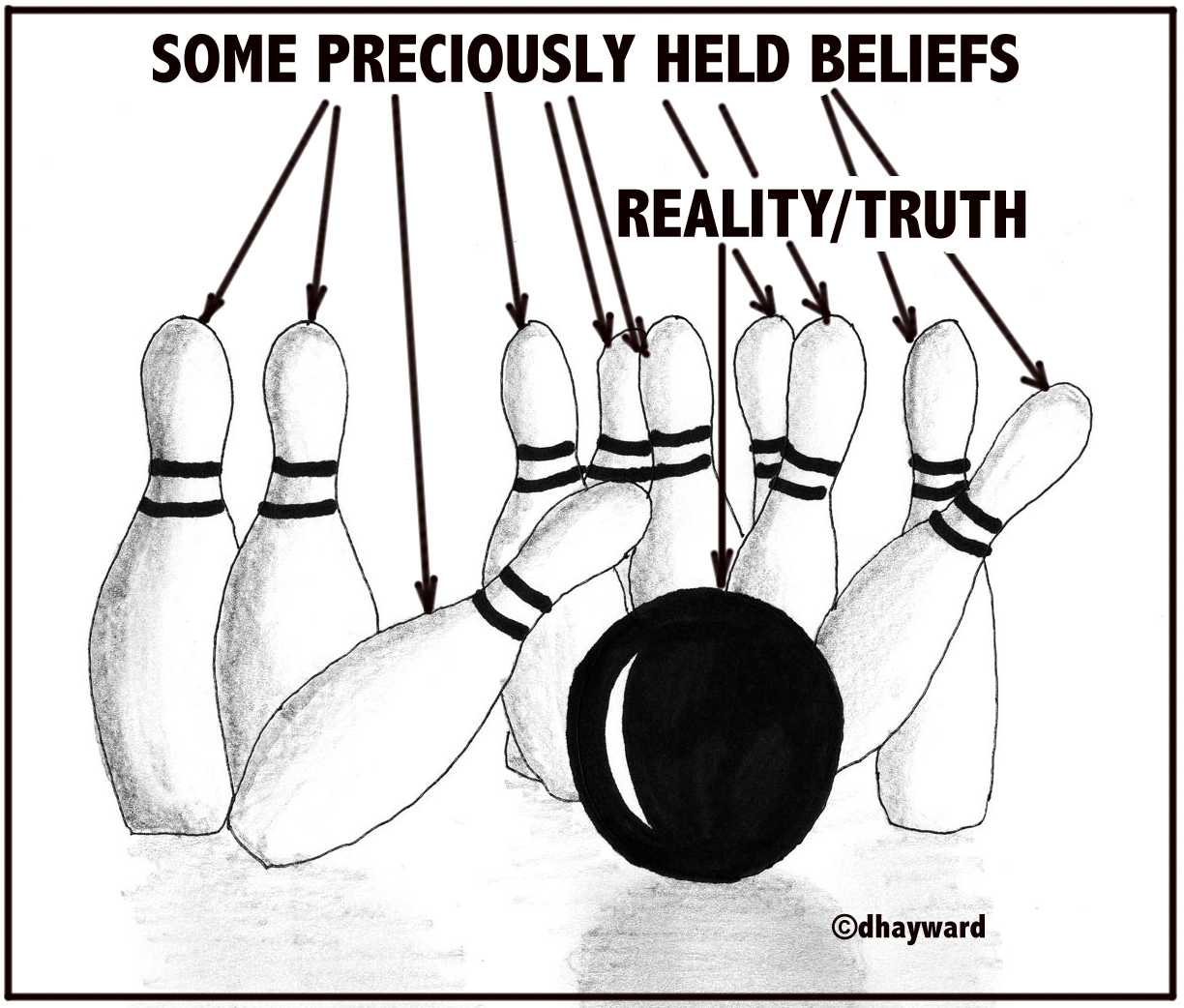
The first is that sometimes our visions bump up against firm reality. There are all sorts of ways this can happen; it is when the bubble bursts and illusions break down. So our envisioning needs to pursue, or allow for, a certain amount of realism.
UPDATE: the nakedpastor has done an excellent cartoon expressing this point:

Which leads to the second: we need to assess what it is that we are valuing, what it is that our souls are set upon. Some visions of the future are not worth pursuing, because the lives envisioned do not flourish. What does it profit a man…?

This is why the crisis is unavoidably spiritual. All our guiding assumptions are being placed under the microscope, and, if we do get through it (and, being an optimistic soul, I think we will) then the choices that we make now will condition the future we receive. We shall reap what we sow.

If we get our values right, all else will follow. Or, put traditionally, ‘seek ye first the Kingdom of God and all these things shall be added unto you’.

Sacraments and social action

Doug has an outstanding post here, explaining why belief in bodily resurrection, sacramental worship, and social action are a seamless robe.

“If the tomb is not empty, though, then surely sacraments and social action are alike in vain. Our corporeal existence has no future, and only our souls or spirits matter, while bodily life is to be left behind. Only if the tomb is empty, if Jesus has been bodily raised from the dead, do sacraments make any sense, or caring for the earth have any value.”