Why I want Jeremy Corbyn to lead Labour

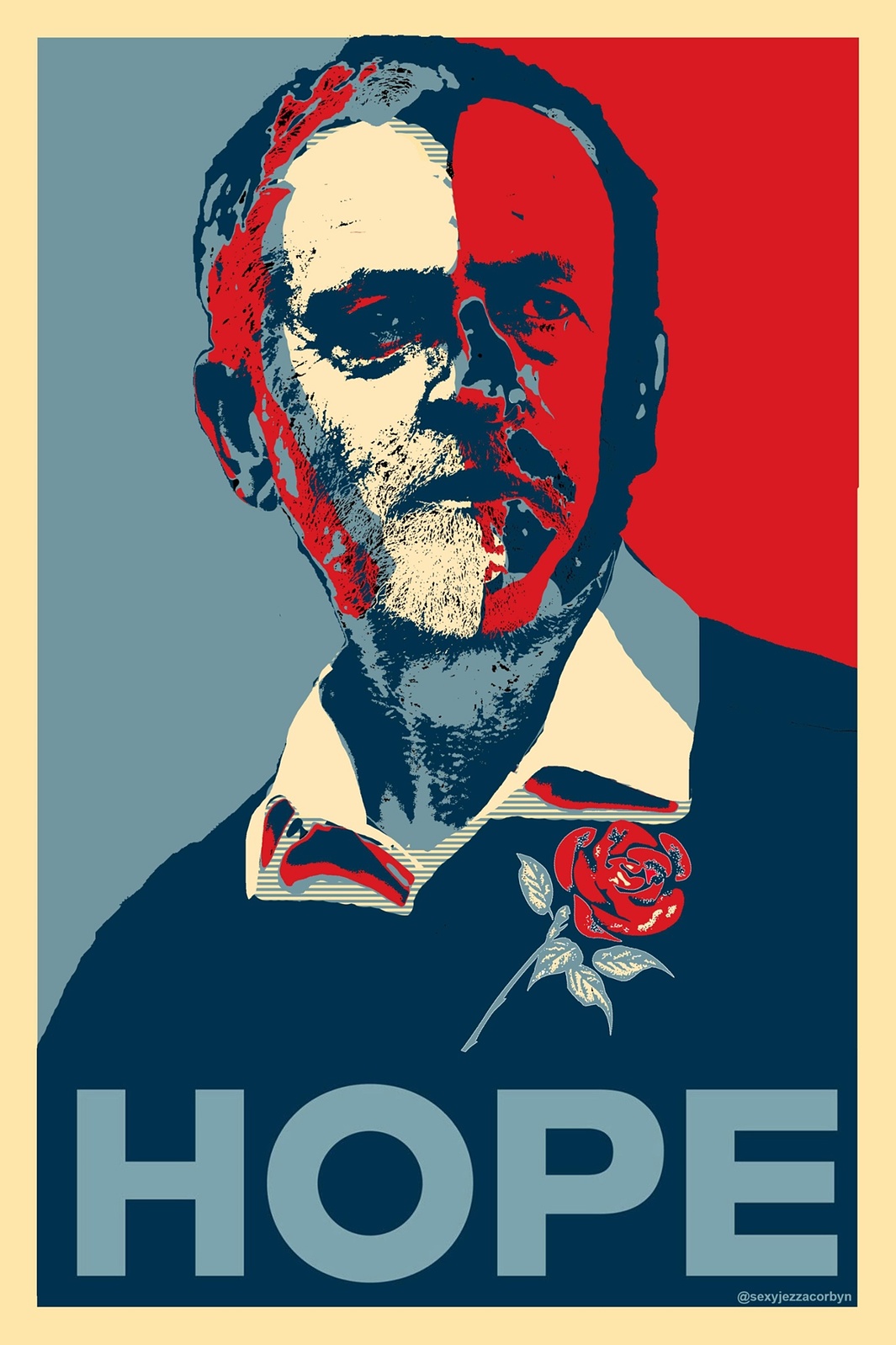
corbynMy Union has written to me asking me to join the Labour party and vote for Jeremy Corbyn. I’m not sure that I will do that, because the Labour party is the only mainstream party for which I have never voted, and I would expect that Harman’s thought police will be actively rooting out new members with a questional political commitment (I’d definitely qualify!) – so why am I interested in who is going to become their leader? Well, in simple terms, Corbyn is someone who might tempt me to change that pattern of voting, and I’d like to explain why.

The first point is simply that Corbyn is so obviously not part of the metropolitan bubble, despite living in Islington. I am guessing that his views have hitherto placed him beyond the pale in terms of internal Labour party politics, and that this has enabled him to have a clearer perspective on the inwardness of the party elite. Whatever the reason, he comes across as authentic, consistent and principled, and that is immediately a huge plus, whatever the specific policy details.

Yet it is the policy details that attract me. I think that he will broaden out our political conversation in some very healthy ways. To begin with, it is very unclear that replacing a state monopoly with a private monopoly in various industries – rail, energy, post and so on – has actually benefited the country, as opposed to the financial industry. It is long past time that we assessed the lived experience of these private monopolies against the promises made, to see whether the politicians involved were wise and prudent or simply distracted by the prospect of generating a quick cash windfall for the Treasury. I also think that emphasising corporate tax avoidance and exploring ways to ensure that, for example, the profits made by the Daily Mail aren’t sent through Bermuda in order to avoid their legal obligations, is a necessary part of a healthy political conversation.

His key pitch, though, is about resisting political measures around austerity, and here I think he has a strong point both politically and morally. The sums involved in trimming back benefits, such as the child credit tax, are truly trivial when compared to either the overall government budget or the sums involved in supporting the financial industry with bail outs. For a society to try and save money by giving less to the weak and vulnerable, whilst turning a blind eye to the vast sums going to those who already have much – this says a very great deal about the sort of society that we are living in, and it doesn’t say anything good.

I believe that for a society to be considered civilised, there must be a certain standard of living below which nobody is allowed to fall. This is not a question of merit, or reward for hard work, or any other form of assessment or ‘means testing’. It is simply to ensure that nobody is thrown overboard as dead weight. This cannot be divorced from a Christian perspective of course – it is rooted in a theology of grace, that ‘all fall short of the glory of God’ and we are all the undeserving beneficiaries of a free hand out in spiritual terms.

Yet it can be defended in purely secular terms as well. To begin with, the notion that hard work is the principal determinant of financial success has been quite thoroughly deconstructed academically. The roles played by accidents of birth, networking, opportunity and simple luck are far larger. Put simply, hard work is not enough – and who is to say that those cleaning toilets work ‘less hard’ than those operating computers in the City? No, the idea that we might ever live in a pure meritocracy is simply a nonsense.

Secondly, the consequence of destroying demand at the lowest end of the income scale, which is what happens when the poor are made poorer, is that the total aggregate demand in an economy shrinks. The conspicous consumption of Louis Vuitton handbags and other luxury items by the super rich cannot compensate for the absence of consistent purchasing on necessities by the poor. To remove the poor from the economic cycle is to shrink the economic cycle itself, and then we are all diminished, both financially and spiritually.

It is because of this that I’m a supporter of a ‘basic income’, which to my mind is the simplest way to ensure that nobody is financially abandoned by the wider society. There are different ways to achieve that, and I’m not sure which method is best, but I believe that this is the sort of conversation that we need to have. The capitulation to the austerity narrative by the Labour party leadership, best exemplified by Harriet Harman’s decision to abstain on the recent package of welfare cuts passed by the government, shows that we need a very different opposition if we are to remain civilised.

I disagree with Corbyn on several things – the top rate of income tax is one of them, as I think it is self-defeating to increase it, it needs to be lowered significantly – but I really want him to lead the Labour party. To my mind the key political question is about how social inclusion is accomplished, not whether, and that leaves lots of room for political disagreements, not least between those who believe that such an aim can only be accomplished by an overmighty centralised state over against those who believe that it can be accomplished by small scale and local cooperative movements. Yet I would emphasise that this is the conversation that we must have. I think that if Corbyn were to be elected leader of the Labour party the quality of our political conversation would significantly improve, and we would all be better for it. So if you are eligible to vote – please vote for Mr Corbyn.

Of Greeks, Barbarians and smooth ball bearings

barbarianI write this a few days after the resounding ‘Oxi’ from the Greek people to the demands from the Troika. In previous years the EU has been able to overturn the results of referenda when they didn’t go in the direction wanted (as with Ireland and Denmark); something tells me that this won’t be possible this time.

Which means that there is every chance that the Greeks will leave the common currency very soon; that will be a glorious and happy day. The setting up of the Euro as a common currency was a politically driven project. It was argued for as a step towards a single state, with a common fiscal and monetary policy. The fact that a common currency wouldn’t be able to function without a central authority implementing those common policies was pointed out at the time, along with predictions of disaster if a single currency was put in place without such a central authority. Sadly such predictions were ignored, and those making them were ridiculed and marginalised, and now we are where it was reasonable to expect us to be.

There is something about a common currency which is akin to a common language. Where there is a common language then the difficulties in communicating are (mostly) removed, and it is possible for speech to flow freely between different people. In the same way, a common currency removes barriers that hinder or prevent trade between different people. Those who share in the common currency share in a common pattern of life, a common civilisation.

The word ‘barbarian’ comes from Ancient Greek usage. It originally referred to a ‘tribal’ people, who were outside the ‘polites’, civilisation (think of it as ‘polite society’). So the barbarians were those who didn’t speek the Greek language and ‘babbled’. Over time it developed the additional meaning of someone who was simply uncivilised or uneducated, and it therefore became a term of abuse within Athenian politics. The barbarian was the person who didn’t share civilised values, who behaved like a monster – hence our inherited meaning of the word ‘barbarian’ today.

Yet who are the barbarians now? I notice, for example, that the cost of a full ‘bail-out’ for the Greek government is estimated at being some 320 billion Euros (I don’t want to say too much about the origin and responsibility for that debt, only to point out that it was accrued in order to save French and German banks, amongst others). Now compare that sum of 320 bn to the sums given in recent memory to the banking system, in order to preserve their private status. The UK government in September 2008 announced a total funding package of 500 billion pounds in order to preserve the financial industry. The US government’s total outlay on a financial rescue package, not including guarantees to institutions, is well over 5 trillion dollars. Barclays Bank alone, which boasted of not having to be bailed out, in the end received over £550 billion pounds of subsidy.

In other words, the actual cost of simply writing off all of the Greek debt would be small change compared to the enormous sums of money that have been used in recent years to prop up the world financial system. The decision on whether to help the Greek government out of its financial distress is a purely political decision, not a financial one. The decision is all about whether the Greek people are part of ‘us’ – the civilised world deserving of civilised care – or whether they are part of ‘them’ – barbarians, best left to their own devices, stewing in their own juice.

Clearly the mood in Northern Europe is to chastise the Greeks for borrowing profligately and spending recklessly, leaving those Northern Europeans to warm themselves with their own sense of pride in their fiscal rectitude. Of course, if we were thinking about proper fiscal virtue then banks that made reckless loans would be required to meet the costs of those loans themselves when they failed. A proper banker would exercise prudence and caution and assess whether someone who was borrowing money was in fact able to pay it back over time. This did not happen, for the simple reason that the Northern European economies did very nicely, thank you, out of an exchange rate that was much lower than it would otherwise have been, because it included less developed economies like Greece.

Surely it is now obvious to even the most obtuse observer that the EU is a system set up to further the interests of global financial capitalism? That it has very little to do with civilised values, and much more to do with making the world safe for the free flow of money? Rather than talking about barbarians, I keep thinking about ball bearings – those small, weight bearing spheres that need to be lubricated in order to keep the machinery working smoothly. That is what modern capitalism requires, to remove all the obstacles and friction that get in the way of the efficient workings of the market. Get rid of different languages, different currencies, different customs in order that the marginal cost of production can be reduced by the extra fraction of a percentage that maximises share holder value!

The suffering that this is causing to the people of Greece is starting to become clear. The people of Greece, not the bankers of Greece or the politicians of Greece, but the people of Greece are the ones who are going to be losing their jobs, deprived of medicines, worrying about where their food is going to come from. So where is civilisation? Do we really want to stay in such a system, that has such contempt for civilised values? Who are the barbarians now?

It amazes me when I hear progressive friends apologising for the barbarity that is the necessary consequence of the way that the EU has been structured. I only hope that enough people can see the truth about the beast that we also say a resounding ‘oxi’ when we get the opportunity.

The principal deceit of the pro-EU campaign

So in the Queen’s speech we have been assured that there will be a referendum on our membership of the European Union by 2017 at the latest. I am delighted that this is going to happen, although I already have grave misgivings about the way in which the debate is going to be framed. The principal deceit as I see it will be to confuse two things which are logically and politically separate – membership in the European Union, and participation in the common market.

We have a history of fair dealing in this country, and my sense of what happened in the previous referendum back in 1975 (the template for which seems to be the one that Cameron is following) is that the British people voted to join a free trade area, a customs union. We had a sense that we would be able to compete within it and earn our way forward. What I suspect was not made clear to the British people, and what I am worried will once again become obscured in the national debate, is that there is a significant difference between a free trade area and the political union that the EU embodies.

There is no excuse for this distinction not to be placed at the forefront of the campaign. The language of the European Union treaties are very clear, not least in the reference to an ‘ever closer union’ in the original Treaty of Rome which set up the European Economic Community, language which has been built upon in all the subsequent treaties. The symbolism of this is straightforward – simply look at a current passport, which demonstrates that British citizens are first and foremost citizens of Europe. That includes our Queen.

It is not essential to be a member of a political union (the EU) in order to benefit from the free trade area. There is another organisation, called EFTA, the European Free Trade Area, which has access to the European Economic Area but which does not require the member nations to concede sovereignty to a supra-national organisation. In addition, the most important elements of global trade are established at a higher level than the EU, through the auspices of the World Trade Organisation. Given that we purchase more from Europe than Europe does from us it is clearly in everyone’s interests that the economic side of our present arrangements is disrupted as little as possible, and that could be done through transferring our membership of the EU to EFTA instead.

No, the real issue at stake in the coming referendum is about national sovereignty. Put simply, do we wish to take charge of our own affairs and work our way in the world as a mature and independent nation? I sometimes feel that our national confidence, at least at the level of the institutional establishment, was at an extremely low ebb in the post-war period, climaxing in the mid-70s, and that this was a factor in the campaign to dissolve our sovereignty. We had infamously ‘lost an Empire and not found a role’. It was as if we could no longer govern ourselves, and looked for a higher authority to take over.

The trouble with that higher authority is that, in the subsequent decades, it has taken on more and more responsibility in more and more areas of our national life, changing everything from how we measure and weigh things to how we fish and how we are able to generate electricity. The true locus of power governing this nation is now off-shore, in Brussels (or, more precisely, in wherever the rolling caravan of ministerial meetings chooses to get together). I do not believe that the British people chose to give up that sovereignty back in 1975 and it is essential that a clear understanding of what is at stake is communicated over the next eighteen months or so, until the referendum itself takes place.

The campaign has already begun, of course, with a salvo of pro-EU businessmen talking about the economic costs of disengaging from the EU. Their actions are what has prompted this article, as I do not wish to see their narrative become the dominant one. If the argument is once again reduced to economics it would represent a deceit about the true nature of the decision that we face. If the argument is centred upon national sovereignty then we will at least be able to say that whatever answer is given is a definitive one. After all, if the British people choose consciously to surrender their sovereignty then that will be that. We will, in practice, become the north-west provice of the European Union, no longer able to make our own choices in the world, which I would see as an immense tragedy and shame – but if that is what people choose, then so be it.

I have two grounds for hope that the national debate will indeed centre on questions of sovereignty, and not on questions of economics. The first is that I believe it to be unlikely that Cameron will be able to get anything substantial from his ‘negotiations’ with other European leaders. It is clear that they are trying to establish a stronger political centre for the EU in order to cope with the stresses and strains caused by the misconceived adoption of the single European Currency. As was predicted at the time, a single currency across different nations could only work if there was also a single political authority with the capacity to require fiscal transfers from one area to another. A currency union without such a political union to reinforce it was simply a recipe for disaster – a disaster that we are now seeing the shape of.

Which leads me to my second ground for hope. I do not believe that the situation in Greece is going to end very well, and it will demonstrate the political nature of the European Union in spectacular fashion. It is unconscionable for the Greek people to be immiserated as a result of decisions made by the political and financial elites in which they had no part. The crisis there – which will likely come to a head in the next few weeks when the Greek government declares bankruptcy – will show the political nature of the EU to anyone watching. It will be the moment when the mask slips and the underlying truth of the EU will emerge.

We need to have a proper debate about the nature of the EU before the referendum, and that proper debate has to centre upon the political nature of the EU, not simply whether we will be better or worse off in a financial sense. We are worth more than that.

The real political earthquake is still to come

Like most of us I was surprised by the outcome of the last general election. I was expecting the Conservatives to have more seats than other parties but not an overall majority; instead, I rather assumed that we were in for a Labour-SNP coalition government for the next five years. The result has been described as a political earthquake but, whilst it was a stunning development, I believe that the real earthquake is still to come.

Notice, first of all, that once the euphoria of victory has subsided, the Conservatives have an extremely small majority, smaller than John Major’s from 1992-1997. That government was significantly hampered in its objectives by having to cope with backbench rebellions, not least over Europe. Anyone remember Major’s expletive-filled denunciations of them? It is very unusual for incumbent governments to win by-elections, so we can expect that majority to shrink over time.

Furthermore, the Eurosceptic wing of the Conservative party has not diminished in strength over the last twenty years or so, rather the opposite. This gives those backbenchers, who are clearly a well organised group, a very significant amount of leverage. Whereas Cameron was able to manipulate the process with respect to the referendum on electoral reform, thus killing off the prospect of proportional representation for another generation, I doubt whether he will be able to do the same with the forthcoming referendum on membership of the European Union. That might be my own hope speaking – I am strongly in favour of our leaving the EU – but there do seem more grounds for such hope at the moment. I can’t see any political compromise that would be acceptable to both those Eurosceptics and the other member governments of the EU. Consequently, Cameron will either have to try and sell a manifestly ‘weak’ package to the British people, or else he will campaign for an ‘out’ vote.

This will be complicated, alongside many other things, by the situation in Scotland. That was where a true political revolution took place, and it will clearly be some time before all the implications of the SNP’s success work themselves through our system. However, just as with the referendum on electoral reform that has settled a question for a generation, so too has the referendum on Scottish independence. Nicola Sturgeon was very clear that the general election vote was just that, and that it was not a vote for another referendum. That, of course, may change over time, but there seems little appetite for another referendum unless there is a very clear sense that there will be a decisive victory for the independence cause. That would require a major shift in the political landscape.

Which may well come if the EU referendum votes for an exit. The headlines over the coming months and years are unlikely to be favourable to the EU cause. The situation in Greece will come to a head, where Greece is likely to be forced to leave the Euro with the consequence of extreme financial hardship. This will, quite correctly, be blamed on the central EU institutions, which sought to set up a single currency without the necessary political centralisation that would have enabled it to work. Those institutions will therefore work towards putting that increased centralisation into effect – and how that then ties into the British referendum will be fairly clear.

So what happens if Britain as a whole votes to leave the ‘ever closer union’ of the EU, whilst Scotland votes to stay? That would be the ‘major shift in the political landscape’ that would justify another independence referendum in Scotland. Would it, could it take place before the actual withdrawal happened, and if so, would Scotland be allowed to stay in the EU whilst the rest of the United Kingdom departed? Legal advice would suggest not, that instead an independent Scotland would be required to apply for membership – and it would only be able to do that once it had set up all the apparatus of independence for itself, including its own currency.

We are, as a nation and as a society, arriving at a major crossroads in our national story, and it is not yet apparent in which direction we shall soon be travelling. Will we vote to stay within the EU and finally abandon any sense of independence as a nation? Or will we vote to leave the EU, which might, paradoxically, sound the final death knell for the country of Great Britain? Or will ‘events, dear boy, events’ once more render these questions irrelevant?

Questions, questions, questions – of such things is a speculative opinion column made. Yet my mind keeps returning at the moment to the ‘serenity prayer’, which runs like this: God, grant me the serenity to accept the things I cannot change, The courage to change the things I can, And the wisdom to know the difference. There are very few ways in which we can make a direct difference to these major historical events. There are things that we have direct control over, things that we can influence – both of which are comparatively small – and then there is the vast world over which nothing that we do has a direct impact.

In the end the real political earthquake is internal; as Jesus once put it, ‘The Kingdom of God is within you’. The arena where we can most effect significant change is in our own soul. If we can overcome all the darkness and evil that lies within each of us, then we will be in a much better position to eliminate all the darkness and evil that lies without. The fundamental political task is an inherently religious one – which is why the greatest religious teacher that ever lived was executed by the state. We live in interesting times.

The important thing is to vote

I write this the morning after a very lively and well attended General Election Hustings at West Mersea Parish Church. It was good to be involved and to become better acquainted with what the options are for us here on Mersea. If it happens again I will be much stricter about time-keeping, so that we could have more questions – there were several excellent questions that we didn’t have time to take. The character of the candidates became very clear, however, and this helps people to make their decision on who to vote for. That, after all, is the very purpose of hustings. I am convinced that we need a much greater involvement with politics at all levels of our society. It matters not only how we vote, but much more crucially, it matters that we vote.

Somewhere in one of my boxes at home I have a picture of me at secondary school in 1987 campaigning in a mock school election (confession – I was sporting a blue rosette with “I ♥ Maggie” on it). I have always been fascinated by politics and for a long time I had thought about a political career. After university I joined the Civil Service in Whitehall in order to become more fully acquainted with the political process. The role that I had involved changing jobs each year in order to be exposed to the different parts of the Department – I was in the Department of the Environment – and one of my jobs was ‘Radioactive Substances’. That is, I worked closely on the monitoring of nuclear power stations, and learned a very great deal about the science involved. One particular job I had – in 1993 if memory serves – was running a public consultation about the THORP processing plant in Sellafield, which was, at the time, extremely controversial. We knew that any decision reached by the government would immediately be taken through the judicial review process by Greenpeace and Friends of the Earth, so we had to be note perfect in describing the how and why behind the eventual decision. When it came before Parliament I wrote the briefing for John Major, and I have a very fond memory of his hand-written comments thanking me for a ‘perfect’ preparation (please forgive the boast!). What I came away from the Civil Service with was a full appreciation of how politics is just like making sausages, you don’t really want to get too exposed to the detail of how it is done!

It is possible – perhaps it is inevitable – that a cynicism about politics develops. The nature of the political process is such that it is extremely rare for a clear principle to be argued for and then carried out by someone who has not had to make all sorts of compromises along the way. In order to achieve anything in politics it is important to be alert to what is possible at any particular moment in time. In political theory this is called the ‘Overton window’ which describes the range of policies that the public are willing to accept. An average politician will work within that range and seek to advance his cause in incremental fashion, making deals and agreements along the way. A great politician will seek to change the nature of the window itself; that is, they would seek to ‘change the political weather’ in order that what had previously seemed impossible to implement later becomes accepted wisdom. In my lifetime the only politician who might be classed in that category is Margaret Thatcher, who clearly changed the terms of the political debate in this country. Even Thatcher, however, was very willing to compromise and make deals along the way, making tactical retreats on issues when it served her larger purpose.

So the great majority of politicians are average, and they are obliged by the very structure of our politics to make compromises, to accept that their ideals will have to be watered down if they are to make any progress at all. This is a recipe for cynicism. If you approach politics with a sense of idealism, a feel for how things might conceivably be, then it can seem a very brutal environment. More than this, when people on the ground suffer at the hands of a bureaucratic state, when decisions seem to be made without any respect for the human context – something which happens more and more these days – then it is easy to become disillusioned about the whole process and say ‘to hell with the lot of them’, and then disengage completely.

All that happens at that point is that the Overton window becomes much smaller, and the possibility of significant change recedes even further away. The saying goes, “all that is required for bad men to triumph is that good men do nothing” and that applies even to each of us, as we exercise our right to vote. If those of us who are dreamers and idealists, who are unhappy with the existing state of affairs, who are shocked or disgusted by the shabby compromises of the political class – if we disengage and do not vote then the process will only become worse. On the other hand, if all the dreamers and idealists do turn out and vote, then the political class will see that what is possible in this country is greater than they had realised, and the possibility of genuine progress comes that much closer.

To put that in religious terms, cynicism is a sin. To give in to a cynicism about the political process, to argue along the lines that Russell Brand does and think that voting makes no difference in the end, is to give greater power to the established and vested interests. It simply makes things worse. The answer is to follow the advice ‘be wise as serpents and innocent as doves’. In other words, do not be under any illusion about the political process, recognise the nature of the beast – but hold on to idealism, hold on to hope, hold on to the sense that things may change – and let that guide your choice as you vote. Whoever it is that we choose to cast our ballot for, it is important that we each exercise that hard-won right. We’d certainly miss it if it was taken away from us.

General Election Hustings in West Mersea

Tomorrow night at 7.30pm at St Peter and St Paul’s Church, West Mersea.

Parliamentary candidates from five political parties are coming to answer questions from the public.

They will be asked about many of the issues that YOU are concerned about, including Bradwell power station.

Please do come along. It’s not too late to submit a question to me by email – the blog name at gmail dot com.

A few brief thoughts on the Bishop’s Pastoral Letter

I am delighted that the Bishops have written such a document. Those who cry ‘Archbishops should stick to theology’ are simply parading their ignorance.

I am most particularly delighted that the document is rooted in the language of virtues and character – clearly the influence of Alasdair MacIntyre and his disciples like Hauerwas. This is very much where I would position myself.

Lastly, despite some questions about tone, I think the overall tenor of the document is a good one – it is an invitation to a larger conversation. I very much hope that it bears good fruit.

So, for once, I want to applaud our hierarchy for something. Of course, I have some specific detailed disagreements, but they may or may not be worth writing about!

Piss Christ and defending the deity

Courier article

In 1987 the American artist Andres Serrano created a photograph that caused much controversy in Christian circles. The image was of a small plastic crucifix suspended in a glass of the artist’s own urine and it was, naturally, called ‘Piss Christ’.

When I first heard about this, and saw the image, my initial reaction was ‘yawn – someone else trying to get shock value from appearing radical’ and to move on to more interesting things. I didn’t think much more about it until I made a passing reference to Serrano’s ‘delinquency’ in an article. This provoked a conversation with a friend that made me look closer at the image and the levels of meaning that it contains.

After all, suspending a crucifix in piss is a rather apt image for the way that secular culture treats Christianity. The culture doesn’t take Christianity seriously enough to want to attack Christians with physical violence, so it just pours scorn upon it. The dominant culture feels that it has won the argument against Christianity and so doesn’t feel the need to engage with Christian claims at any depth. Christianity is simply something to be excreted along with the other rubbish that the body politic has digested.

More deeply than this, however, is the sense that the photograph can be seen as presenting a profound theological truth. That is, Christians claim that Jesus was the Son of God. The crucifixion, therefore, and everything associated with it – the beating and flogging, the insults and spitting, along with the execution itself – tells us something important about the nature of God, and how we human beings relate to the divine. What the crucifixion says (amongst many other things!) is that God cannot be equated with human glory. There was no more shameful way to die than crucifixion, and this presented a huge problem to the early church. How can the promised Messiah be someone hung up to die on a tree? Yet this is precisely the mysterious wonder at the heart of Christian faith – that our own notions of what is glorious are what need to be re-examined. We preach Christ crucified, a scandal to the Jews and foolishness to the Gentiles.

One of the most important implications that flow from this is that God doesn’t need to be defended. If God can be glorified even in the cross, then what is left that God needs to be protected from? The whole notion is absurd. It would be rather like putting a giant wall up in space to defend the sun from attack by nuclear missiles. The Sun is perfectly capable of protecting itself.

Hence, for the first few hundred years of the Christian faith, when it experienced its greatest growth and ended up converting an entire Empire, there simply was no ‘defence’ of Christianity in any physical sense. The early believers allowed themselves to be thrown to the lions in the Roman arena rather than deny their faith – and taking up arms would itself be such a denial. Those early believers were called martyrs, a word that simply means ‘witness’, because they were pointing to the truth of the faith, a faith that did not, indeed could not, be advanced by force of arms.

This has had profound consequences for Christian culture, not least in terms of providing room for the growth of free speech. If a dominant religion does not need protection from being insulted – for it was born out of the greatest insult that human beings could offer – then there is no need to exercise such control over free speech that insults represent. A mature faith can simply laugh it off and move on, regarding it as like the babblings of a toddler, just beginning to appreciate the effects of words.

Wittgenstein once wrote: “Humor is not a mood but a way of looking at the world. So if it is correct to say that humor was stamped out in Nazi Germany, that does not mean that people were not in good spirits, or anything of that sort, but something much deeper and more important.”

What the Christian understanding of glory – and truth, and witnessing, and violence – allows for is room to laugh. Room for satire and absurdity, room for all the ways in which we can transgress and play, all the ways in which we can be queer and eccentric and odd – dare I say, room for the religious to wear silly dresses and make up and prance around on a stage? At the heart of the Christian claim is the faith that God has acted in the world to put things right, that we have been saved. The natural consequence of such salvation is joy and laughter, a release from an obligation to take things too seriously, for fear that if we don’t, those things that are precious to us will be taken away.

Which leads, of course, to the question that needs to be put to those of another faith, which may not have such confidence. Is it possible for a faith that was established through violent military victories, and which experienced its greatest growth as part and parcel of those military victories, and which raises up as the ideal man someone who was violent and led such military victories – is it possible for such a faith to co-exist with satire and absurdity, with comedy and pantomime? Is it possible for such a faith to detach itself from the identity that was formed and established through military victories in such a way that it can live in peace with those that it has not conquered? Or is it true what the Ayatollah Khomeini said, “There is no room for play in Islam . . . . It is deadly serious about everything.” Rather a lot depends upon the answer.

Not all religions are the same

Courier article

I write this on the day after the attack by militant Muslims on the Charlie Hebdo office in Paris, where journalists, cartoonists and police were murdered in cold blood – all for the ‘crime’ of causing offence to the Prophet Muhammed. There is much lamentation at this turn of events and, worse, lots of cringeworthy hand-wringing from the politically correct and morally bankrupt who try to say that the cartoonists brought it on themselves, that perhaps they should have been more polite to the violent fascists. The contradictions in the modern secular West are bearing down upon us with a vengeance.

I have written before in these pages (September of 2012) about the ‘taking of offence’, and how that is understood as being a sin in Christianity, as it is a form of pride; and I have also pointed out in these pages (last November) that Jesus himself was often exceptionally rude, most often to those in positions of power and authority who were exploiting the poor and vulnerable. I have no doubt whatsoever that if Jesus had been gifted with the art of illustrating rather than the art of speaking then he would have portrayed the Pharisees of his day with images that were just as rude as those that the Charlie Hebdo journalists have produced.

After all, who are the people who are trying to rule by fear and intimidation? Of course we can point out all the ways in which the oppressive West acts with injustice in areas of the world, as we blindly allow the worship of Mammon to destroy all that makes for a joyful humanity. The point is, however, that we are able to say those things. The West has within itself the possibility of transformation. It is the very fact that we have a culture of open criticism that makes the culture of the West worth defending, even whilst admitting to its many and diverse sins.

What this campaign of intimidation against the West is trying to do is to force us to renounce our fundamental values, to put a boundary around what we can or cannot say. This is not something that the West can tolerate, on pain of self-dissolution. To be the West simply is to be the place where there is freedom of speech, where there is protection for the giving of offence. After all, where is the merit in allowing freedom of speech where that only applies to pleasant speech? No, it is precisely the speech that is rude and offensive and vulgar and obscene and blasphemous that is the speech that needs to be protected. It is only when that form of speech is protected that the dynamism at the heart of Western culture can flourish – and it is that dynamism which allows for so many of our blessings across so many different spheres.

This campaign of intimidation is not new. It has been in plain view for all astute observers since at least the fatwa against Salman Rushdie in 1989, and the origins run very deep in Islamic thought. This is not a campaign being waged by stupid people. On the contrary, the intellectual roots are profound and subtle, and not without merits from which we can learn. However, what we in the West need to decide is whether to confront the intimidation or to submit to it. In other words, do we actually wish to retain a culture which allows for freedom of speech or do we not? Let us not be in any doubt that this is what is at stake; that this battle has been waged for at least a generation; and – let us be very clear – we are losing.

After all, how many newspapers have published the ‘offensive’ cartoons this morning? Why so few? The answer is obvious – it is because they are afraid. They have already accepted the status of dhimmitude, which is the term given to those who are tolerated by Islam. Those who wish to subordinate the West can see that our cultural and political leaders lack the testicular fortitude required to stand up to intimidation, and so they pursue their course of action, confident of their eventual victory. They believe that the tide of history is with them and there is, as yet, very little evidence to say that their perception is wrong. They do not have to do much more – simply set the agenda of terror, and allow demographics to do the rest.

I have two questions following on from the atrocities in Paris. The first is: will the West ever recognise that not all religions are the same and that, in stark contradiction to the accepted narrative, the fruits of democracy and free speech in the West are the direct consequence of the deep action of Christian theology within our culture? The accepted narrative, after all, with its fetishisation of Galileo and Darwin, casts the Christian authorities as those who are hostile to free speech, to intellectual exploration, to the vulgar dynamism which is at one and the same time the most attractive and most alarming feature of our society. This accepted narrative is a travesty of the truth, but, much worse than that, it forms part of the intellectual blindness of our political and cultural elite which in itself prevents a full and effective engagement with the fascists who are attacking us. Unless our elite can recognise that we need to rest our values on a religious foundation then we will inevitably lose ground to those who can recognise that reality.

My second question is for those who wish to apologise for the Islamic faith. Does Islam have within itself the resources required to police the violent terrorists? Those resources are both doctrinal and practical. After all, the list of terrorist atrocities that have been carried out by Muslims over the last thirty years and more is extensive, and the YouTube beheadings carried out by ISIS are simply the latest example of a well-established trend. Those who carry out such barbaric acts are explicitly and avowedly doing so as Muslims, in the name of Muhammed, and they cry out ‘Allahu Akhbar’. It is not enough for other Muslims to say ‘that is not true Islam’. The links between the terrorists and long-established Islamic teaching are not trivial. The links between extremist behaviour and extremist preaching, such as the Wahhabi strand of Islamic thought financially backed and promulgated by the Saudi government, are not minor.

Yes, the situation has many complexities which I have not been able to engage with in this article, yet I do find myself wearying of those who take refuge in moral complexity and equivocation, when by so doing they give clear succour and encouragement to the enemy. We need to recover an awareness of our own religious roots, of the vitality and dynamism of the Christian faith – yes, even the Church of England! Without it, all that we most value in our society will pass away. The fundamental clash is clear. We either kowtow and appease those who wish to police what we are allowed to say, or else, with Jesus, we revel in our rumbunctious rudeness and tell the enemy where to go.

Please sir, can we protect our daughters?

It would seem from the relative amount of column inches and the vehemence of feminist opinions expressed in recent newspapers that the greatest trauma that can be suffered by a woman is when someone who makes a living from appearing in public ends up having more of a public appearance than she had planned. This at a time when we learn that some 1400 young working class girls have been systematically and repeatedly raped in Rotherham, and that such abuse extends to other towns and cities in this country, like Rochdale, Oxford and Didsbury. Clearly what happens to the rich and famous is far more important than what happens to the poor and vulnerable.

We are living in a profoundly sick and decadent society. The destruction of all our inherited norms and practices, dependent on the millenia of Judeo-Christian worship, has led us into a cultural abyss where we no longer know what we stand for and we let abominations pass unremarked whilst working ourselves up into a tizzy over trivialities. I feel that I have a better understanding now of what is meant by the references to Nero fiddling whilst Rome burned. Our version involves indulging in prurient shock whilst our daughters are systematically raped in the streets and the authorities continue to say ‘move along now, there is nothing to see’.

Actually it is worse than that. The authorities themselves are compromised. I notice that where a celebrity might possibly – conceivably – have been involved in the abuse of a child, that same police force that has been criminally and culpably negligent with regard to hundreds of poor girls makes sure that the world knows through live BBC coverage that they will leave no stone unturned in rooting out decades old evidence whilst the occupant is abroad. Once more, it is what happens to the rich and famous that is considered important – as for those girls, well, they’re just a bunch of chavs so they don’t count do they?

In our society, it is, after all, a much more profound violation of our new cultural norms to be a racist than a rapist. Consider the remarks from Denis McShane, the former MP for Rotherham, who has said that he was far too much of a ‘Guardian-reading lefty’ to investigate what was happening to the constituents that he was sworn to represent and protect, and that “there was a culture of not wanting to rock the multicultural community boat”.

This “multicultural community boat”: this is the problem, this is where there is a foundational contradiction which generates chaos and moral collapse and which leads directly to the trauma of Rotherham’s children. I have written before in these pages that you cannot support the progressive expansion of rights for women and gays and all the other wonderful things about a humane and tolerant society and at the same time also allow cultures which vehemently repudiate those progressive values to flourish. One will eventually have to give way to the other, and I am genuinely afraid that, beneath all the public headlines, it is the non-Western values that are becoming the most deeply rooted in this land.

We need as a community to have a positive vision for what sort of society we would like to live in, and then we need to take positive and active steps to ensure that such a society is defended. This cannot be left to the authorities. This cannot be conducted as a ‘top-down’ exercise but has to be embraced by the community as a whole.

What most concerns me in the stories coming out of Rotherham, which I am sure are repeated elsewhere, are the tales about fathers wishing to protect their daughters and then being prevented from doing so by the intervention of the authorities, both in the form of the South Yorkshire police and the various other council and social services. (Let us remember, of course, that this is also the council that took foster children away from a happy home simply because the parents were revealed to be UKIP supporters).

Those who are in positions of power and authority need to be brought back to an awareness of the nature of public service, and to align their own values more closely with those whom they serve. At the moment the distance between the officials and their public is dangerously wide, leading to contempt on both sides. This can only lead to an outbreak of rage, not least on the part of those fathers who have been sidelined – a sidelining, after all, which is perfectly in keeping with the wider cultural shift that has caused such havoc over the last two or three generations.

Those who exercise power and authority over us can only do so if, in the end, they have the consent of the governed. Their monopoly on use of force can only be sustained when there is a wider trust in those who control the use of force. When the establishment is quite clearly a diseased and cancerous monstrosity, which fails in the most elementary and foundational duties of protecting the most vulnerable – and then prevents ordinary people from carrying out their own most basic and foundational duties as parents – then, sadly, there will come a time when men will snap. I think there is still time to avert Enoch Powell’s gloomy prophecies from coming to pass – just – but we need to pay much more serious attention to all the aspects of this issue, and not let ourselves get distracted by the embarrassments of film stars.