
Once there was a blazing fire here.
People of all ages gathered together to remember.
Now there is ash.
Why do I think of the church when pondering these things?
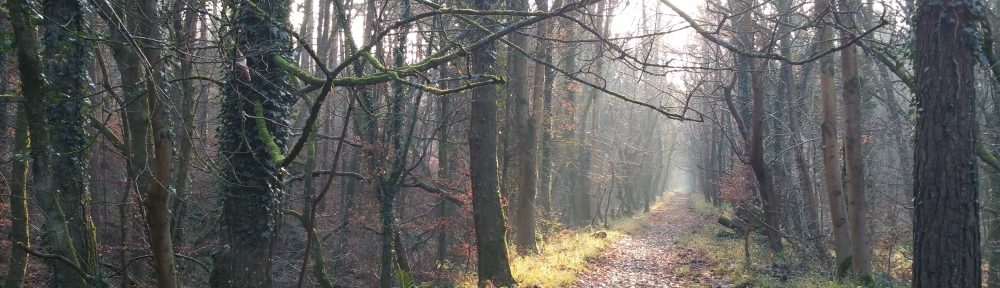
Once there was a blazing fire here.
People of all ages gathered together to remember.
Now there is ash.
Why do I think of the church when pondering these things?
Which puts into words what I have been trying to push with respect to Mersea vis-a-vis Tesco’s arrival. Wonderful stuff. (HT Purpose More Obscure)

That is to say, the teacher will feel that this is not really a legitimate question at all.
And it would be just the same if the pupil cast doubt on the uniformity of nature, that is to say on the justification of inductive arguments. -The teacher would feel that this was only holding them up, that this way the pupil would only get stuck and make no progress.- And he would be right.
(LW)
One of the themes from last Saturday’s Learning Church (audio available here).
However, the Weekend Fisher spells out much of what I was trying to say. (And thanks to Mad Priest for putting me on to her blog).
This is by way of a follow-up to the Hauerwas quotation and my post on Tearing Down The Curtain.
This is from James Alison’s book ‘Undergoing God’:
“I’d like to close with a story which I think illustrates the elements of what I think True Worship in a violent world looks like, and is about. It is a story which I have gleaned from Chris Hedges’ book War is a force that gives us meaning… Hedges, a war correspondent who covered the Bosnian war extensively, tells of meeting the Soraks, a Bosnian Serb couple in a largely Muslim enclave. the couple had been largely indifferent to the nationalist propaganda of the Bosnian Serb leadership. But when the Serbs started to bomb their town, Gorazde, the Muslim leadership in the town became hostile to them, and eventually the Soraks lost their two sons to Muslim forces. One of their sons was a few months shy of becoming a father. In the city under siege, conditions got worse and worse, and in the midst of this Rosa Sorak’s widowed daughter-in-law gave birth to a baby girl. With the food shortages, the elderly and infants were dying in droves, and after a short time, the baby, given only tea to drink, began to fade. Meanwhile, on the eastern edge of Gorazde, Fadil Fejzic, an illiterate Muslim farmer, kept his cow, milking her by night so as to avoid Serbian snipers. On the fifth day of the baby having only tea, just before dawn, Fejzic appeard at the door with half a litre of milk for the baby. He refused money. He came back with milk every day for 442 days, until the daughter-in-law and granddaughter left for Serbia. During this time he never said anything. Other families in the street started to insult him, telling him to give his milk to Muslims and let the chetnik (the pejorative term for Serbs) die. But he did not relent.
Later the Soraks moved, and lost touch with Fejzic. But Hedges went and sought him out. The cow had been slaughtered for meat before the end of the siege, and Fejzic had fallen on hard times. But, as Hedges says: When I told him I had seen the Soraks, his eyes brightened. ‘And the baby?’ he asked. ‘How is she?’
This for me is the sign of True Worship: not only the complete lack of concern about his reputation within his own group; not only the refusal to believe the lies about the despised other whose fault it all was; not only the daily trudging, for fourteen and a half months, through the dawn with milk before the snipers could see well enough to shoot. But the brightening of the eyes at the contemplation of the baby in whose jagged-edged creation he had found himself playing a part.
This attempt of mine to dwell with you in the maior dissimilitudo leaves me with a certain fear. It is the fear that True Worship in a violent world is going on all around us, particularly unnoticed by those of us who have a strong interest in Worship and liturgy, and are thus particularly likely to succumb to the attractiveness of the similitudo and to be blinded to that of which it is supposed to be a sign. I ask you to pray with me that our deliberations and our liturgies be part of our being inducted, even if it be kicking and screaming, into finding our role in the jagged edge of creation and the brightening of the eyes.
(The full text of this chapter, with an explanation of the obscure terms at the end, is available here. Which I wish I had discovered before typing all of this out :o)
A pupil and a teacher. The pupil will not let anything be explained to him, for he continually interrupts with doubts, for instance as to the existence of things, the meaning of words, etc. The teacher says ‘Stop interrupting me and do as I tell you. So far your doubts don’t make any sense at all’.
(LW)
Which really reminds me of the conversations I used to have at moq.org. Let us give thanks for our liberty.
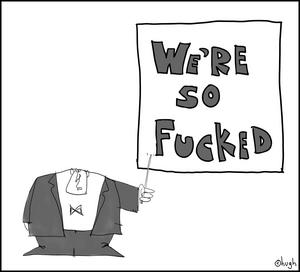
Paul Kingsnorth tells it like it is. Great cartoons as well (from here).
“Expect the end of the world. Laugh.
Laughter is immeasurable. Be joyful
though you have considered all the facts.”
Go read the whole thing, it’s marvellous. Not just that, it is the medicine that my soul needs.
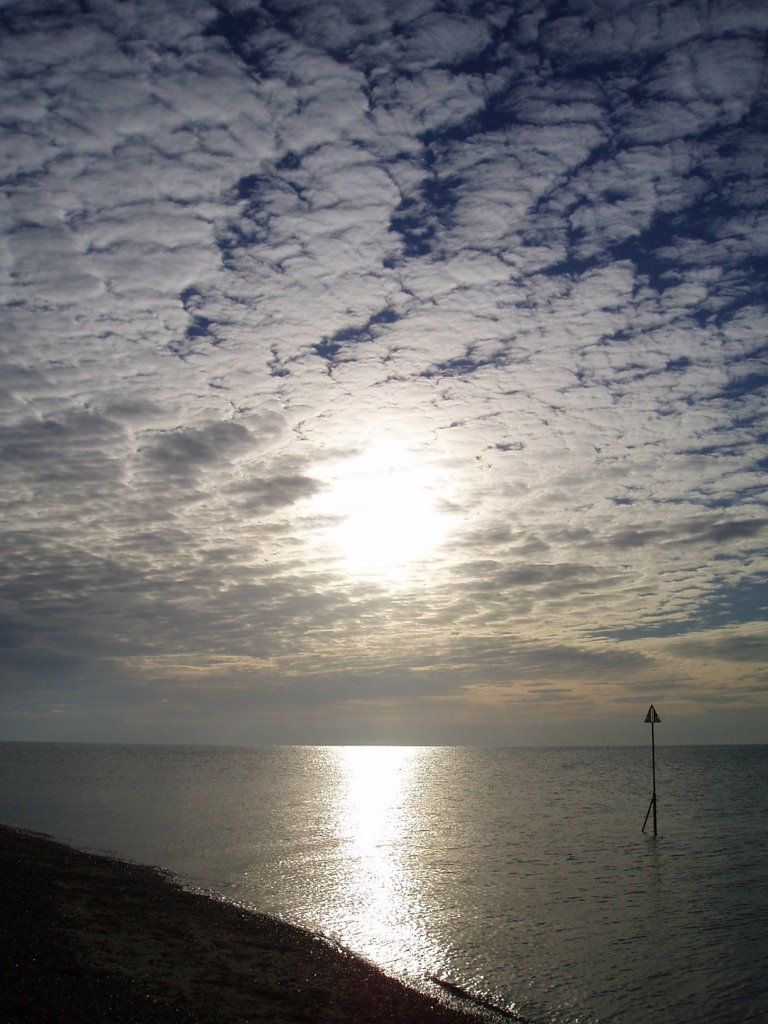
 This is because yesterday’s picture may not have been the clearest.
“Remember remember the 5th of November, gunpowder treason and plot.
I see no reason why gunpowder treason should ever be forgot.”
So, for non-UK readers, it was a reference to the burning of a human effigy that will take place this weekend on this bonfire. Tho’ I understand he’s not called ‘Guy’ anymore, he’s called Osama.
Sorry to have been even more obscure than usual. But just because I’m on a roll:
Words offer the means to meaning, and for those who will listen, the enunciation of truth. And the truth is, there is something terribly wrong with this country, isn’t there? Cruelty and injustice, intolerance and oppression. And where once you had the freedom to object, to think and speak as you saw fit, you now have censors and systems of surveillance coercing your conformity and soliciting your submission. How did this happen? Who’s to blame? Well certainly there are those more responsible than others, and they will be held accountable, but again truth be told, if you’re looking for the guilty, you need only look into a mirror. I know why you did it. I know you were afraid. Who wouldn’t be? War, terror, disease. There were a myriad of problems which conspired to corrupt your reason and rob you of your common sense. Fear got the best of you, and in your panic you turned to ______. He promised you order, he promised you peace, and all he demanded in return was your silent, obedient consent.