About Elizaphanian

Rector of West Mersea

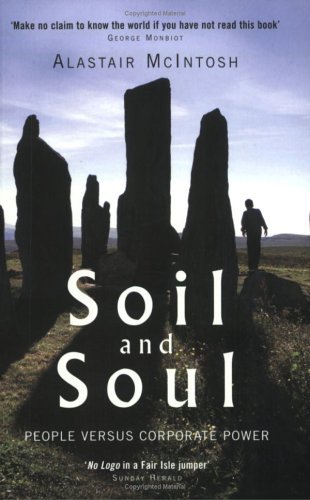
Soil and Soul (Alastair MacIntosh)

Very good, extremely interesting, and just the thing to remotivate my own small motionings towards ecological activism on an island. Lots of strong positives to the book, including that it took theology seriously, the one real negative was that the theological angle just wasn’t very good (very liberal and new agey) – example (p219): “Traditional Christian theology saw its function as having been to appease once and for all God’s wrath at human wickedness…”

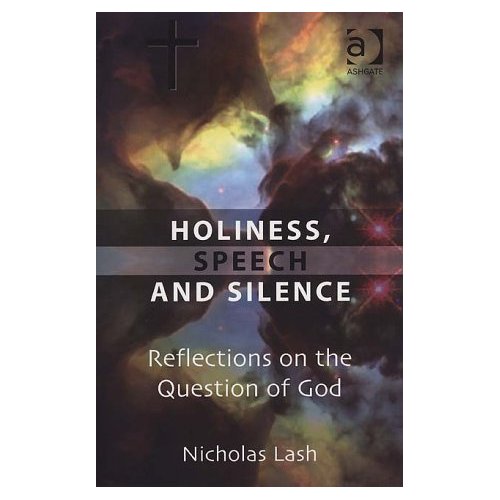
Aaaggghhhh!!!! He really needs to read James Alison (or Hauerwas, or Lash….)

And yet: “The deepest activism is always spiritual activism.” (p240)

Oh yes.

Living in the End Times (James Alison)


James Alison may just be my favourite theologian of the moment (other contenders are: Stanley Hauerwas, Nicholas Lash and Eugene Peterson [and hey Tim I’ve finally got started on Christ Plays…])

Anyhow, on holiday I read this book of his, which was wonderful – and a perfect antidote to the Christian fundamentalism that I’ve been reading much about recently. Lots of good things about it, much which will inform my sequence of Learning Church talks, and possibly my favourite quotation is this one, but this is also good: “Heaven is a dwelling in the Father which is possible only for those for whom death has come to be a non-definitive, non-toxic part of their story. Once again we are face to face with the central mystery of the Christian faith, which is that Jesus Christ the Risen Lord is risen AS crucified victim. Death is swallowed up by glory.”

His main argument is that, properly understood, the end of the world should transform the way that we think about this one, so that we enter into the way of life that Jesus first imagined to be possible (I think of U2’s ‘When you look at the world’). He draws on Wayne Meeks, arguing that the apocalyptic imagination is characterised by three dualities: cosmic (heaven/earth), temporal (this time/the time to come), and social (good/bad, or righteous/unrighteous). Alison argues that Jesus is using this apocalyptic language (the language of his time) in an eschatological way, ie in a way which first undermines and then overcomes and rejects those dualisms. I think the strongest argument for this is that Christ quite clearly rejects the social dualism, and we should take that rejection as governing his attitude to the other dualisms in the family.

One sequence of thought thrown up from reading Alison: it seems to me that the gay community within the church has something very important to say to the broader body, and one can see the strand of gay sensibility being profoundly rooted in Scriptural ideas, thinking of the church as bride, and therefore Jesus as groom. So if the wider body rejects the gay community then it is undoing itself. This is not to say that all the arguments from the gay perspective are correct – I don’t think they are, even if Alison’s are(!) – but it is undoubtedly the case that I would want to belong to a church in which the gay perspective has an essential part to play, and is not excluded – and that such a church would more adequately represent the Body. Rejecting the gay perspective is, in Alison’s terms, apocalyptic, not eschatological – in other words, it is not fully Christian. I’m persuaded of that.
TBTM20060907


‘But I did not get my picture of the world by satisfying myself of its correctness; nor do I have it because I am satisfied of its correctness. No: it is the inherited background against which I distinguish between true and false.’
Wittgenstein

John Bell as Des O’Connor?

Of course, I could be wrong…: Global Cooling And The Anglican Church: “Also, and I am sorry to have to tell you this, John Bell and the Iona Community are so B.O.F. as to be the worship equivalent of Des O’Connor hosting ‘Tonight At The London Palladium.’ In fact, all alternative worship is out, out, out, unless the leader of it has used his authority to sleep with all the members of his congregation and has been banished by the Church into outer darkness.”

MadPriest makes me LOL yet again.

The guitar

One day I shall tell a story about a drunken Irish poet and the consumption of daffodils in Wivenhoe. Not today. However, said poet gave me his guitar for my 21st birthday – something I think he later regretted, but all his regrets are now moot, as he’s gone to be with the great poet in the sky.

In these fifteen years since possessing this rather nice guitar (Ovation custom balladeer – beautiful sound) I’ve had one serious go at trying to learn it, in the first two years after obtaining it, and I picked up about a dozen chords, and half a dozen songs. It then sat unused for a very long time, and I even tried to sell it on eBay three years ago, much to my wife’s disgust. As is often the case, my wife was right to be disgusted, and I am glad I still have it, because I took it out of the case the other night, for effectively the first time in nearly a decade, and I found it immensely pleasurable. I could even still play a couple of songs – Traci Chapman’s ‘Talking ’bout a revolution’ was the one that gave most pleasure. Now to move on to Johnny Cash, as one of my commenters suggested 🙂

I’ve got a long way to go with it, but I might post occasional things about the joys of learning a new chord. And I keep meaning to respond to Tim about folk music… all when I get the chance.