About Elizaphanian

Rector of West Mersea

Not optional

This is basically yesterday morning’s sermon (text John 6 1-21), though I had this in the back of my mind when I was composing it.

You may sometimes hear it said that the important thing for any Christian is to love Jesus, or to have a “personal relationship” with Jesus (despite that last description being profoundly unScriptural). It’s true that loving Jesus is important, but I think we need to be a little more guarded before assuming that we know what it actually means to love Jesus. For think about the crowd in our gospel reading today – these people clearly loved Jesus, they have been flocking around him around the lakeside – but they didn’t understand him. They wanted to make him king by force so Jesus has to leave. They didn’t get the meaning of his Messiahship right, and there is a lesson for us here – so often we love our own reflection in Christ, rather than allowing Christ’s reflection in us to be born. As Christians we are called to allow ourselves to be shaped by His desires, rather than trying to shape Him according to our desires.

Context of the story: John the Baptist has been beheaded, and Jesus has withdrawn with his disciples. Yet the crowds would not leave him alone. Instead of withdrawing even further, he had compassion on them – they were “sheep without a shepherd” if you remember last week’s gospel. This episode says important things about Jesus’ character.

2 things going on: the first is to do with kosher regulations. This was a major issue at the time, the Pharisees were very concerned to ensure that all the proper regulations were followed, and your soul was in danger if you didn’t keep them. But here is a dramatic overcoming of those taboos. Bread broken and passed around – who knows what people had touched, whether they were unclean. Yet it didn’t matter.

The second and even more important miracle is the overcoming of personal relationships. There was a strong sense at the time that who you ate with defined who you were. Again, this was why the Pharisees were so offended when Jesus broke bread with sinners. Jesus ate with sinners, therefore he was a sinner too. But here, on this hillside, Jesus generated a fellowship amongst thousands of people. What a risk – you are who you eat with.

Generating solidarity amongst so many people – this was the real miracle. No hierarchies, no ranking system, no sense of some people being more important than others. No sign of Jesus going round the crowd saying ‘are you worthy to eat with me?’ And this is the church, the church which is formed when bread is broken together. Our gospel readings over the next few weeks will be exploring this, for this is something crucial to church identity – when Jesus says unless you eat my flesh and drink my blood you have no life in you. Breaking bread together is not an optional part of being a Christian – it is in fact precisely where we are trained to set aside our own desires and become part of a new community that is not of our own making, not a product of our own desires, but a product of the one who said ‘do this in remembrance of me’. The Eucharist is where we learn what it means to love Jesus, it is the school for our desire. Sharing in it is a matter of obedience to our Lord’s clear command and teaching: ‘it is our duty and our joy…’

The point of stories such as this is that you are moved by them to recognise the real nature of the person at the centre. Because once you see that nature, and are moved by it, then you are very close to loving it – loving Him, loving who He actually is, not a fulfilment of our fantasies, not someone determined by the desires of our egoes, but the Messiah, the Christ, the son of the living God.

In meeting Jesus we are fed food for our souls. Jesus fed the five thousand, they all ate and were satisfied. And although we were not there on the hillside in Galilee, we are here this morning, and we can meet Jesus, love Him and be fed by Him, when we break bread together.

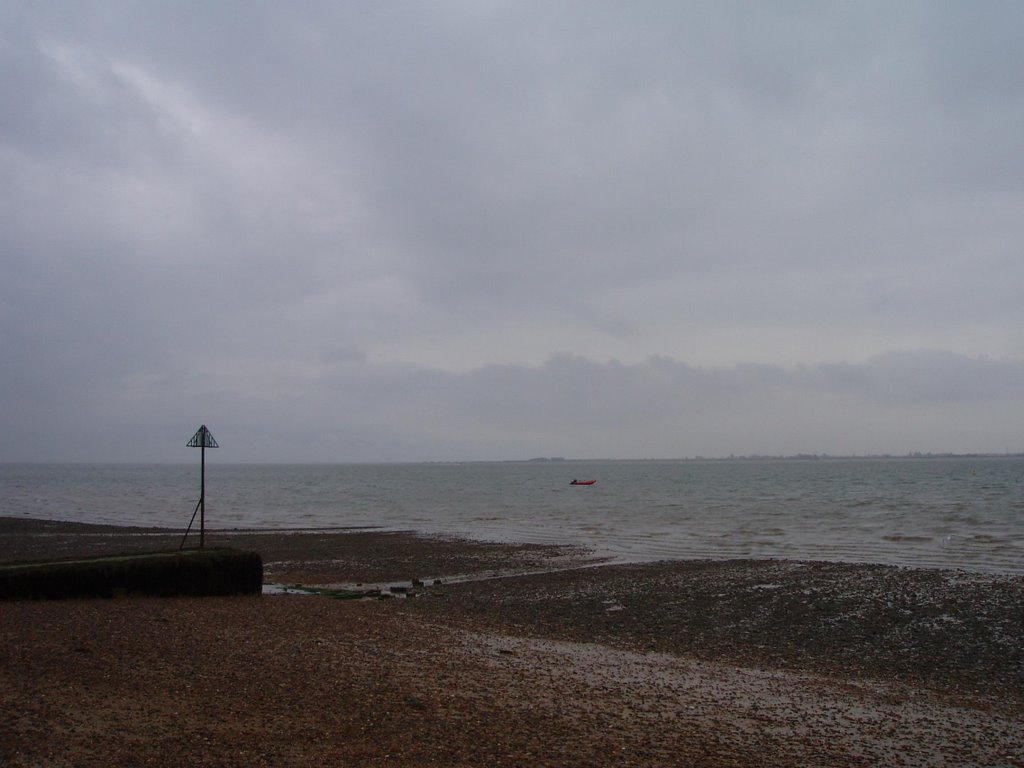
Why I love Wittgenstein

Ben Myers has been hosting a sequence of ‘why I love…’ This is my offering.


“If what we do now makes no difference in the end, then all the seriousness of life is done away with” – a remark which Wittgenstein made to his friend Drury, skewering the universalist heresy. Wittgenstein was a deeply serious man, and I believe he developed insights which all theologians need to absorb. Whilst it is debatable whether he was in fact a Christian, he certainly believed in God, and infamously saw things ‘from a religious point of view’. Whilst at service on the Eastern Front in WW1, he was known as ‘the man with the gospels’, as he never went anywhere without taking Tolstoy’s summary with him. He was a rather tortured soul in terms of his sexuality, he revered Augustine (the biggest influence on his own thought – he felt the Confessions to be “the most serious book ever written”), he hated virtually all modern music (you could “hear the machinery in Mahler” for example) and he gave up all his wealth to his sisters, as he felt that they were the only people unlikely to be spoiled by it. Clearly, in a different era, he would have been a monk, possibly a hermit. I find him a compelling human being: complex, flawed, yet gripped by the claim of the divine upon his life.

What is most important about Wittgenstein intellectually is his method of philosophy, which prevents a fruitless pursuit of metaphysical ‘solutions’; more precisely, it teaches us what metaphysics actually is. As such, Wittgenstein’s method is a necessary discipline for theologians, as it prevents us from mischaracterising the nature of Christian doctrine. As he put it himself “Christianity is not a doctrine, not, I mean, a theory about what has happened and will happen to the human soul, but a description of something that actually takes place in human life. For ‘consciousness of sin’ is a real event and so are despair and salvation through faith. Those who speak of such things (Bunyan for instance) are simply describing what has happened to them, whatever gloss anyone may want to put on it.” Wittgenstein has had a great influence on contemporary theology, from Hauerwas to Herbert McCabe, and it seems to me to be a wholly beneficial one.

Whilst most understandings of Wittgenstein do emphasise the ‘Sturm und Drang’ of his life, I think there is a generally underappreciated current of joy. He used to relax by going to the cinema, especially enjoying Westerns – and he found this to be of value. He wrote early in 1947, ‘I have often learnt a lesson from a silly American film’ – and I believe that he watched something that year which gave him some inner peace, that allowed him to believe that his life was worth something after all. After all, his last words were ‘tell them I’ve had a wonderful life’. I like to think it was what he had in mind.

Why I worry

Davidov left an interesting comment earlier, which I’d like to say something about. He wrote: “The theory [Peak Oil] relies on the twin ideas that this will be precipitous and that it is imminent. In other words the theory expects imminent crisis. It also assumes that the human species will find this crisis so bleak that (despite having only used oil for 100 years or so) we will be unable to adapt without great suffering. There is in particular no evidence for the last proposition.”

Yes Peak Oil – however optimistic you are on depletion rates – predicts something ‘imminent’ and ‘precipitous’. In terms of human civilisation this is epochal. Even if it takes 20-25 years to halve the amount of oil (an optimistic assessment) there is no way in which to adjust to that lower-energy future without huge pain.

The single word explaining the difference between 1850 and now is: population. There are vastly more of us, and this expansion of population has been driven by access to more resources – some in terms of higher quality crops, some in terms of integrating marginal farmland, but the vast majority in terms of fossil fuel use. We use something like ten calories of fossil fuel energy per calorie of food consumed.

Much of that energy is wasted. Some can be replaced by other forms. But that we are facing something like a 50% reduction in available energy in my lifetime seems to be beyond dispute – and that means that the sustainable population, although there isn’t a linear relationship, will also be reduced.

There are various ways in which this might happen. The four horsemen will probably take most away: war, pestilence, famine (death!) – but I also expect huge population movements.

I think Western countries will be insulated from much of the worst, at the beginning. We will see disasters elsewhere in the world first, as leading indicators (eg Rwanda).

Unless Iran gets dragged into the war, of course. In which case it’ll happen overnight. That’s probably the best that could happen to us, paradoxically enough, ie be forced to change our society whilst there is, in fact, still a cushion of fossil fuels available.

I have become more pessimistic than I was, simply because I am persuaded that a) it is happening now (look at what is happening in Saudi Arabia) – so there is no time for society as a whole to prepare, and b) the depletion rates will be comparatively high – therefore a quicker collapse.

I see twenty years of increasing warfare and slaughter ahead of us, and no possibility of release from it, until the number of people on the earth has been reduced by a quarter to a third, and the ‘engines’ of the world economy have shifted onto a non-fossil fuel basis.

This classes me as a Peak Oil optimist by the way. That is, I think that our present civilisation will be able to continue, not in materialistic terms, but in terms of continuity of memory. I don’t think we’re facing a dark age type collapse, and I think our descendants living in fifty years time will have a wonderful life. I just think we’re going to suffer before we get there.

Truly, that makes me an optimist.