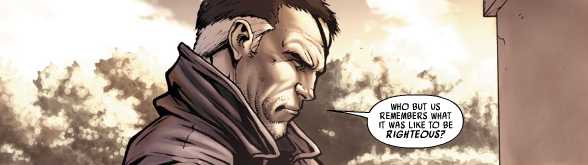
Captain America, remembering to be righteous

Took my eldest to watch Cap the other day, I thought it was rather good.

As is often the case, I feel that popular culture is often more revealing than high culture of the moods and currents currently flowing in our civilisation.Captain America represents old values, things that we have forgotten.

This is the struggle that we face. An attempt to restore forgotten virtues in a culture that has become corrupted. From the ‘ur-text’ of “After Virtue”:

…if the tradition of the virtues was able to survive the horrors of the last dark ages, we are not entirely without grounds for hope. This time however the barbarians are not waiting beyond the frontiers; they have already been governing us for quite some time. And it is our lack of consciousness that constitutes part of our predicament. 

The reason why I like popular culture such as this is because here they are at least conscious of the problem, and seem able to explore it freely. (See here for an article about the riots, see here for a bit more on the mythology of Cap)

A different place

Back from holiday, and feeling that, having been in one place, I have very much now travelled to a different one. Which is good. A handful of self-referential links:

My satnav and my God – this morning’s sermon, which was more joyfully received than usual 🙂

Honi Soit qui Mal y Pense – me on phone-hacking, and the triumph of prurience.

How do we fight for what we believe in? – a slightly more considered reflection on Breivik.

There might be something long and ruminative later this week. On holiday I was completely without screens, I couldn’t read books, I was with people that I loved and who loved me, and I had time to think and dream. It has done me the very world of good.

Anders Breivik’s "Christianity"

In his own words:

If you have a personal relationship with Jesus Christ and God then you are a religious Christian. Myself and many more like me do not necessarily have a personal relationship with Jesus Christ and God. We do however believe in Christianity as a cultural, social, identity and moral platform. This makes us Christian.

European Christendom isn’t just about having a personal relationship with Jesus or God. It is so much more. Christendom is identity, moral, laws and codexes which has produced the greatest civilisation the world has ever witnessed.

I’m not going to pretend I’m a very religious person as that would be a lie. I’ve always been very pragmatic and influenced by my secular surroundings and environment.

As a cultural Christian, I believe Christendom is essential for cultural reasons. After all, Christianity is the ONLY cultural platform that can unite all Europeans, which will be needed in the coming period during the third expulsion of the Muslims.

As this is a cultural war, our definition of being a Christian does not necessarily constitute that you are required to have a personal relationship with God or Jesus. Being a Christian can mean many things: – That you believe in and want to protect Europe’s Christian cultural heritage. The European cultural heritage, our norms (moral codes and social structures included), our traditions and our modern political systems are based on Christianity – Protestantism, Catholicism, Orthodox Christianity and the legacy of the European enlightenment (reason is the primary source and legitimacy for authority). It is not required that you have a personal relationship with God or Jesus in order to fight for our Christian cultural heritage and the European way. In many ways, our modern societies and European secularism is a result of European Christendom and the enlightenment. It is therefore essential to understand the difference between a “Christian fundamentalist theocracy” (everything we do not want) and a secular European society based on our Christian cultural heritage (what we do want). So no, you don’t need to have a personal relationship with God or Jesus to fight for our Christian cultural heritage. It is enough that you are a Christian-agnostic or a Christian atheist (an atheist who wants to preserve at least the basics of the European Christian cultural legacy (Christian holidays, Christmas and Easter)). The PCCTS, Knights Templar is therefore not a religious organisation but rather a Christian “culturalist” military order.

There’s lots more in the same vein.

I’m about to go away on holiday. I might have more to say about all this when I return, but it will be on my other more political blog – Gandalf’s Hope.

Motive

If it turns out that he’s “a right-wing Christian fundamentalist” and those doctrines provided a motive for his behaviour then such doctrines need to be denounced and combatted. In just the same way that the doctrines that give rise to terrorists shouting ‘Allahu Ackbar’ also need to be denounced and combatted. Of course, that would expose a contradiction at the heart of our society – or, perhaps more accurately, a self-hatred. Muslims etc are victims of the oppressive West, therefore they are on the side of the angels. This Norwegian nutter is an expression of the oppressive West, therefore he is on the side of the devils.

Perhaps there are all sorts of mitigating circumstances and doubtless we will come up with all sorts of explanations but in the end evil is as evil does and he is responsible to the Almighty for what he has done.

Why, O LORD, do you stand far off?
Why do you hide yourself in times of trouble?
In his arrogance the wicked man hunts down the weak,
who are caught in the schemes he devises.
He boasts of the cravings of his heart;
he blesses the greedy and reviles the LORD.
In his pride the wicked does not seek him;
in all his thoughts there is no room for God.
His ways are always prosperous;
he is haughty and your laws are far from him;
he sneers at all his enemies.
He says to himself, Nothing will shake me;
I’ll always be happy and never have trouble.
His mouth is full of curses and lies and threats;
trouble and evil are under his tongue.
He lies in wait near the villages;
from ambush he murders the innocent, watching in secret for his victims.
He lies in wait like a lion in cover;
he lies in wait to catch the helpless;
he catches the helpless and drags them off in his net.
His victims are crushed, they collapse;
they fall under his strength.
He says to himself, God has forgotten;
he covers his face and never sees.
Arise, LORD! Lift up your hand, O God.
Do not forget the helpless.
Why does the wicked man revile God?
Why does he say to himself, He won’t call me to account?
But you, O God, do see trouble and grief; you consider it to take it in hand.
The victim commits himself to you; you are the helper of the fatherless.
Break the arm of the wicked and evil man;
call him to account for his wickedness that would not be found out.
The LORD is King for ever and ever; the nations will perish from his land.
You hear, O LORD, the desire of the afflicted;
you encourage them, and you listen to their cry,
defending the fatherless and the oppressed,
in order that man, who is of the earth, may terrify no more.

Psalm 10, NIV

(NB for a flavour of what I’m guessing is part of his motivation, do some research on Fjordman and read his writings. They are very interesting and have been very influential.)

Evil suffers a (small) setback

This is going to be a bit of a rant, and I’ll probably wish I hadn’t written it tomorrow… BUT

I’m glad the News of the World is shutting down. I generally see the tabloid newspapers as being a physical embodiment of many of the worst aspects of human nature (and not just because I’ve been bitten by them, it long predates that). To put that in a less wordy fashion, I think the tabloids are evil. I think they serve the Enemy. And now, for one brief and no-doubt temporary moment, the bright white light of public scrutiny has been turned on to those who have caused or colluded in wickedness and we are revolted by what we see. Thank God we still have some moral substance in us.

No doubt there were good and conscientious Germans who worked hard for the Nazi regime and never personally murdered a Jew, but who were out of a job when the camps shut down. Yes, an extreme analogy, but the difference is only one of scale. Never forget that the Nazis were enabled to pursue their policies because they had first whipped up the scapegoating process, and it is precisely that evil scapegoating process that the tabloids specialise in.

So I am glad of heart. I don’t care that this will be cynically manipulated by Murdoch and that we will soon have the Sun seven days a week. For one brief moment evil has suffered a setback. Today is a good day.

Another hymn meme, and some more good thoughts on music

We care so much about music in worship – and we care because it matters.

Some good thoughts from Tim here, and the Artsy Honker here, and I am shamelessly stealing this CS Lewis quote from the latter, which I love:

“There are two musical situations on which I think we can be confident that a blessing rests. One is where a priest or an organist, himself a man of trained and delicate taste, humbly and charitably sacrifices his own (aesthetically right) desires and gives the people humbler and coarser fare than he would wish, in a belief (even, as it may be, the erroneous belief) that he can thus bring them to God.

“The other is where the stupid and unmusical layman humbly and patiently, and above all silently, listens to music which he cannot, or cannot fully, appreciate, in the belief that it somehow glorifies God, and that if it does not edify him this must be his own defect. Neither such a High Brow nor such a Low Brow can be far out of the way. To both, Church Music will have been a means of grace; not the music they have liked, but the music they have disliked. They have both offered, sacrificed, their taste in the fullest sense.

“But where the opposite situation arises, where the musician is filled with the pride of skill or the virus of emulation and looks with contempt on the unappreciative congregation, or where the unmusical, complacently entrenched in their own ignorance and conservatism, look with the restless and resentful hostility of an inferiority complex on all who would try to improve their taste – there, we may be sure, all that both offer is unblessed and the spirit that moves them is not the Holy Ghost.”

My musical thought for the day: mindless and emotive worship music is popular (in some circles) because it is a corrective to the excessive rationalism promoted (in some circles) by our culture. It might explain the apparent paradox of brilliant IT nerds enjoying near-fundamentalist churches – it brings balance to their force 😉

Here’s the meme, again from Doug, who won’t let me escape…

1. Choose a hymn that you love to hate. It must be in a widely used and current hymn-book.
2. Say why.
3. Tag three people.

An honest answer would be ‘All Things Bright and Beautiful’ but I think that would be too easy. So a possibly controversial one:

1. Make me a channel of your peace.
2. A good prayer set to a difficult tune which is often murdered by a congregation that is unfamiliar with it. What makes it worse is that it is quite often chosen for funerals because people have been exposed to a good performance by a pop star (eg here) and the sentimental level is pushed up to 11. Blech.
3. I tag: Byron, Cranmer and Dave W.

The moral character of beauty

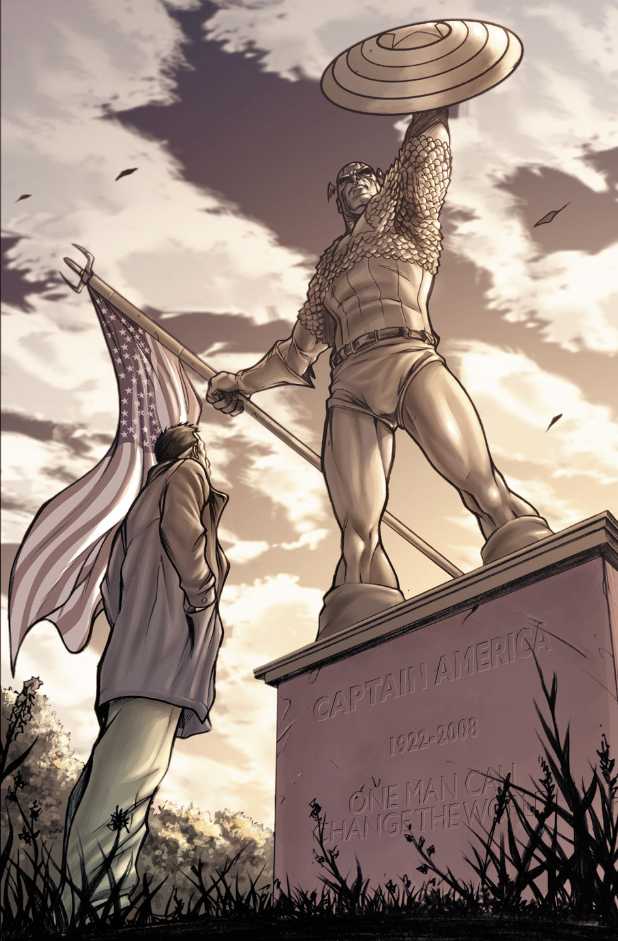
A question asked by RevSimmy in the comments: “the equation of the aesthetic and the moral – i.e. beautiful art/music has a moral effect. Do we agree? Why (/not)?”

I would say: yes, I have no doubt that beauty has an effect on character, partly from watching this programme recently (and I’ve purchased the book, but haven’t read it yet).

Of course, this is a complicated proposal. I happen to think that the Weeping Woman of Picasso is also tremendously beneficial to character – but I’m not sure I would count it as beautiful, even though I could (and have) spent ages contemplating it.

I feel on stronger ground when thinking about architecture – I think the living environment affects how we live, both directly and indirectly.

And of course music….

What do people think?

Scruton’s programme is available on Youtube, part 1 here:

TBTMs

It’s been a strange few days. Some of these links might have been shared before.

An article by Joseph Tainter.
Space and Time are NOT the reward for getting your priestly ministry done: they are the necessities for getting your priestly ministry done.
The importance of Evensong.
How the Tea Party organises without leaders.
The most spiritually literate films of… (follow links on bar on left)
The 50 funniest scenes in the history of film.
The habit forge

Roman Catholic Social Policy vs Sharia Law

I was shocked (shocked, I tell you, shocked!) by the Observer’s comment “I would take sharia law over roman catholic social policy.”

I find this unfathomable, and offer up this post so that people can have a natter about it, should they so desire. Here are a few thoughts to kick things off:

– I see catholic social theology as one of the glories of Christian thinking and practice. Whilst I have some minor disagreements with it (eg some aspects of sexual ethics – I disagree with Aquinas as to how to properly describe the telos of sexual behaviour) on the whole I find it a tremendously congenial place to stand;
– in contrast I see sharia law as profoundly iniquitous, not in theory (which I can understand) but in practice. To put it bluntly, the imposition of sharia law – not least if it threatened my daughters, eg their education – is something that I would have very few qualms about fighting…

Roughly speaking, it seems to me that if you have any desire for the full human flourishing for those who are not the dominant heterosexual males in a society, then the Catholic side of things has to be preferred.

Off you go 🙂

Defending the BBC

Bishop Nick saying good and interesting things here. From a conservative point of view, what most strikes me is the confusion inherent in (what seems to be) the Tory perspective of seeking to get rid of the BBC in favour of “market forces”. This is idolatry of the first order, and actually a very good example of what conservatism is against – the destruction of an organic, entrenched, idiosyncratic, local and national institution in favour of some half-baked intellectual scheme and theory. I think there are problems with the BBC – not least bubble thinking – but it needs to be defended from the depradations of the Jacobins.

Ah – forgot that I’ve written on this before (at more length).

PS I was looking for a .gif of ‘I love BBC’ to stick on my sidebar, but can’t find one. Any hints?